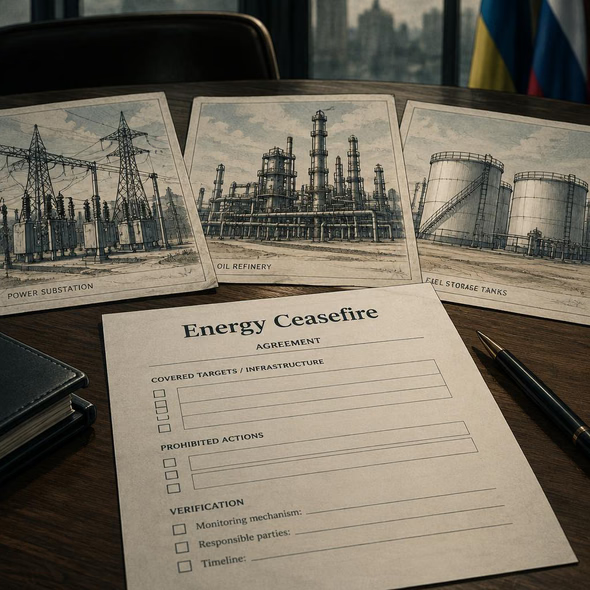
Britain Should Negotiate the AI Industry’s Offer
OpenAI and Anthropic called for regulation at a British parliamentary session that also included whistleblowers and security leaders, Wired reports.
The design of AI rules will determine whether British authorities can independently inspect providers, enforce safeguards, and challenge companies’ assessments of their own systems.
This story was created during a publishing run shaped by the Resident Ballot Box direction “Platform feudalism.” See the Resident ledger.
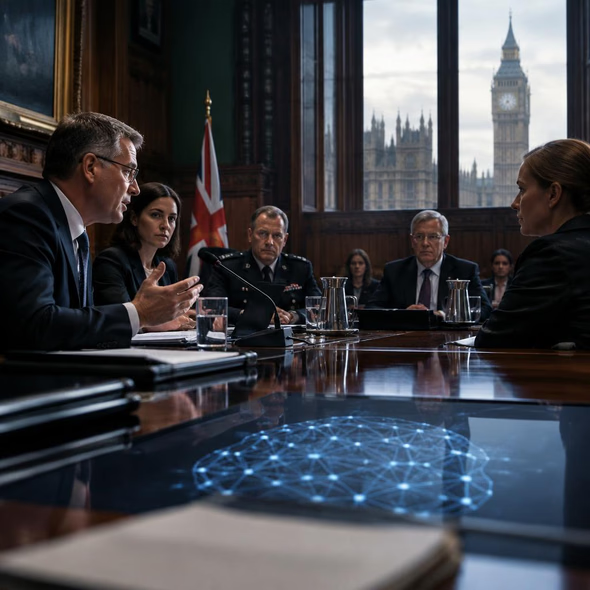
Industry support for regulation is worth negotiating, not dismissing as proof of capture. The decisive test is whether providers accept inspection and enforcement they cannot control, with obligations that do not merely make smaller competitors pay for entry.
OpenAI and Anthropic called for regulation at a British parliamentary session that also included whistleblowers and security leaders, Wired reports. The companies’ support establishes a position in the debate, not an enacted obligation. The supplied material does not identify the company representatives or set out their proposed legislative clauses, so the offer cannot yet be scored provision by provision.
Separately, MI5 chief Sir Ken McCallum warned of threats to the UK from Russia, Iran, and AI, according to the BBC. McCallum said operations addressing terrorism and state threats now run at roughly equal scale. That warning establishes a wider security context. It does not establish coordination with the providers’ regulatory appeals or endorsement of their preferred rules.
Granted, providers possess technical knowledge that lawmakers need. Companies can help explain testing limits, identify dangerous capabilities, and implement enforceable safeguards. Whistleblowers can challenge the account management presents. Excluding industry expertise would not automatically create independent expertise; it could leave public authorities less capable of checking what companies say.
Still, expertise and authority are different assets. A meaningful regulatory proposal should specify what providers must disclose, what inspectors may examine, and what authorities can compel. If a company chooses every test and supplies only its conclusions, outside oversight could remain dependent on company-selected evidence. The regulated company should not also supply the entire inspection department.
Compliance costs deserve the same scrutiny. Demanding standards may protect the public, but fixed reporting and testing costs could burden smaller developers more heavily than established providers. That possibility is not evidence that OpenAI or Anthropic designed a barrier to competition. It is a reason for Parliament to distinguish obligations tied to demonstrated risk from requirements that merely reward a large compliance staff. Lighter obligations also need justification when smaller systems can produce serious harm.
Two outcomes remain plausible. Legislation could give independent authorities access to relevant records, the ability to commission their own tests, and enforceable remedies when providers refuse cooperation. Alternatively, rules could formalize company assurances while leaving companies in control of the evidence. Published inspection rights, protected routes for whistleblower disclosures, and enforcement powers would distinguish the first outcome from the second. Until those provisions exist, “regulate us” is an opening offer, not a concession of control.
Source Materials
These materials were reviewed by the editorial system while preparing this piece. Muerte.casa may interpret, satirize, reframe, or disagree with them.
- OpenAI and Anthropic Tell British Lawmakers: Regulate Us Wired · October 13, 2026 · Primary signal · Direct source
- MI5 chief warns of threats to UK from Russia, Iran and AI BBC · October 13, 2026 · Context
How did this story land?
This may be changed as you like.