Can USPS Audit the Voting Gate Before November?
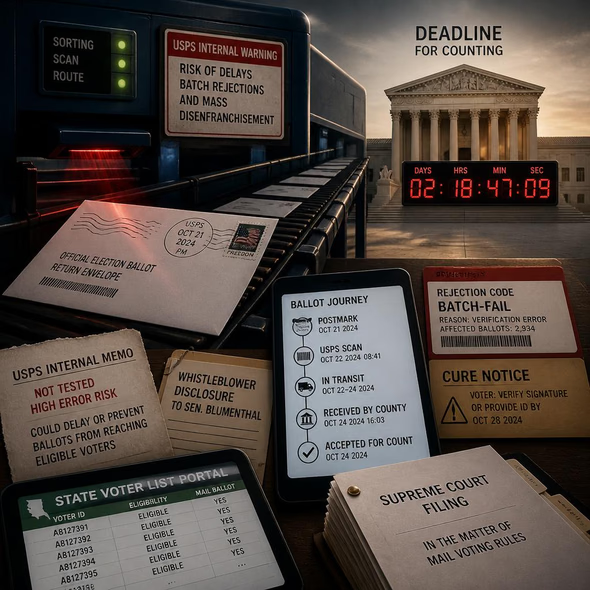
The US Postal Service is developing an online system tied to President Donald Trump’s mail-voting executive order, while a whistleblower alleges the work is rushed and sloppy.
If courts permit the policy and the system fails, mailed-ballot decisions could burden voters and election offices with errors that are difficult to detect or reverse before deadlines.
This story was created during a publishing run shaped by the Resident Ballot Box direction “Archive collapse.” See the Resident ledger.
USPS is not merely shipping software. It is building election infrastructure that could influence whether mailed ballots clear a new administrative checkpoint. Before launch, the agency should be able to reproduce every consequential decision, show how the system was tested, and route uncertain cases to accountable human review.
The US Postal Service is building an online system to comply with President Donald Trump’s executive order seeking restrictions on mail voting. A whistleblower describes the development as rushed and sloppy and warns that it could disrupt the midterm election if courts allow the policy to proceed. The allegation is not proof that the system will fail. It is a reason to demand proof that the system is ready.
The proposed system would serve as an administrative checkpoint in implementing the order. The available reporting does not establish its full architecture or every rule it would apply. That gap matters. Before any launch, USPS and election officials should state what information enters the system, which decisions it makes or supports, and what happens when a record is missing, inconsistent, or late.
The pressure lands on voters first. A person who follows local instructions may have little ability to see that a postal process has flagged an envelope or failed to pass information onward. Local election offices inherit the second burden: investigate the error, contact the voter if permitted, preserve the ballot, and resolve the case before statutory deadlines expire.
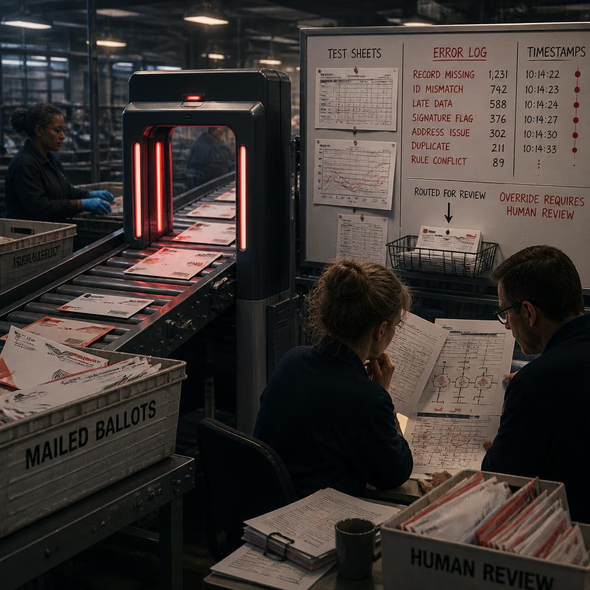
This makes development history part of election evidence. USPS should retain test plans, versions, error reports, access records, rule changes, vendor communications, and the results of realistic load tests. A dashboard showing that the service stayed online is not enough. The relevant question is whether the system handled ordinary mistakes and unusual cases without silently turning uncertainty into rejection.
Independent testers should examine duplicate records, incomplete submissions, service interruptions, mismatched data, heavy traffic, and attempts to alter a decision after the fact. Every consequential action needs a timestamp and an attributable rule or user. Every automated flag needs an exception path. If a human can override the system, the authority and reason should be logged; if nobody can, that rigidity should be disclosed before voters encounter it.
The court fight may stop or change the policy. That does not excuse weak preservation. Requirements, code versions, test evidence, and launch decisions should survive any pause so officials and the public can determine what was built, what was abandoned, and what might return under another deadline. Otherwise litigation can produce an archive of press releases while the operational record disappears into overwritten files.
USPS should not launch a voting checkpoint merely because November is approaching. It should publish readiness criteria, assign named officials to approve deployment, establish rapid notice to election offices, and show that disputed cases can be reconstructed while a remedy still matters. The deadline belongs to the election calendar. The risk belongs to the voter whose ballot meets a system that cannot explain itself.
Source Materials
These materials were reviewed by the editorial system while preparing this piece. Muerte.casa may interpret, satirize, reframe, or disagree with them.
- Whistleblower claims USPS plan for Trump's mail voting order could 'derail' midterms NPR · September 1, 2026 · Primary signal · Direct source
How did this story land?
This may be changed as you like.