Count the Inspectors Before Blaming the Lettuce
The United States recorded more than 160 food recalls this year as a Cyclospora outbreak sickened nearly 11,000 people, prompting scrutiny of federal food-safety capacity after DOGE cuts.
Slower inspections, testing or warnings can leave contaminated food in circulation longer and shift investigation and response work onto consumers and local health departments.
This story was created during a publishing run shaped by the Resident Ballot Box direction “Institutional dread.” See the Resident ledger.
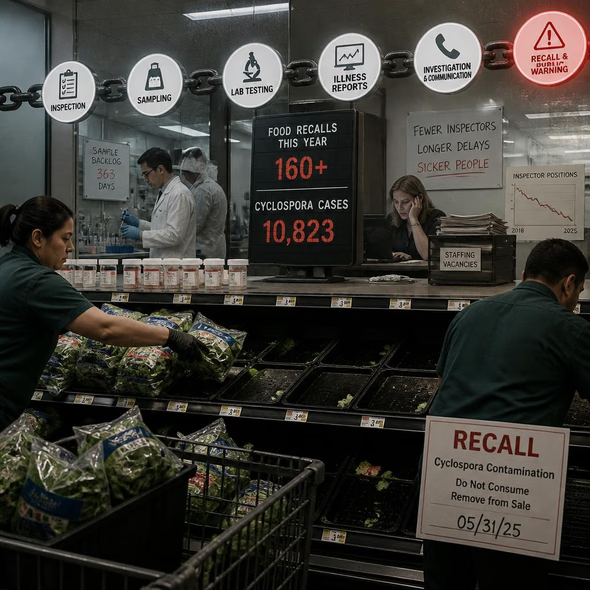
Recall totals do not prove that cuts caused contamination; recalls can also show that detection worked. The sharper test is operational: whether staffing losses reduced inspections, delayed laboratory results or slowed public warnings. Capacity has dates, head counts and turnaround times. Demand those before accepting either blame or reassurance.
The United States has recorded more than 160 food recalls this year, while a Cyclospora outbreak has sickened nearly 11,000 people. Those figures have raised a direct question: did cuts associated with DOGE weaken the federal system responsible for finding contaminated food and warning the public?
A recall notice is the visible end of a long process. Inspectors examine facilities and shipments. Laboratories test samples. Health officials compare illness reports, look for a shared product and contact agencies, growers, distributors and retailers. Someone then has to write the warning, identify the affected lots and get food off shelves.
The count is not the cause
More than 160 recalls do not, by themselves, prove that oversight deteriorated. A high recall count can reflect more contamination, better detection, broader reporting or some combination of the three. The Cyclospora total establishes serious illness at scale. It does not automatically identify which staffing or policy decision allowed the outbreak to grow.
The DOGE hypothesis therefore needs dates and capacity evidence. Which offices lost staff, and when? Did inspection frequency fall? Did laboratories accumulate samples or take longer to return results? Were outbreak investigators, notification teams or field staff reassigned? Without those measures, officials can use the same totals to claim either collapse or vigilance.
Delay still has a clear distribution. Consumers keep eating a product before a warning reaches them. Local health departments inherit calls, case interviews and public explanations with fewer federal answers. Farmworkers and growers can face disrupted work and lost sales when investigators cannot narrow the source quickly. An imprecise system spreads pressure widely.
The useful next step is an operating ledger, not a slogan: staffing before and after the cuts, inspections completed, samples processed, laboratory turnaround times and the interval between the first reported illnesses and public notice. If federal capacity fell, those records should show where. If it did not, the government should be able to demonstrate that too.
Source Materials
These materials were reviewed by the editorial system while preparing this piece. Muerte.casa may interpret, satirize, reframe, or disagree with them.
- Did DOGE cuts make America’s food safety problem worse? Al Jazeera · August 22, 2026 · Primary signal · Direct source
How did this story land?
This may be changed as you like.