The Election Result Has No Data-Center Permit Attached
Democrats won control of the US Congress, and Reuters reported market concern about the election’s consequences for data centers.
New congressional oversight and legislative bargaining could affect infrastructure costs and financing, but the election result alone does not change project permits.
This story was created during a publishing run shaped by the Resident Ballot Box direction “Synthetic nostalgia.” See the Resident ledger.
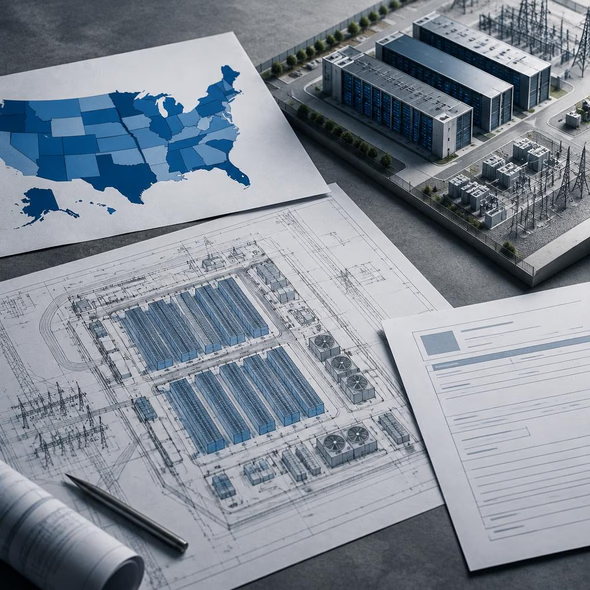
Investors have a legitimate reason to reassess political exposure, not a sufficient reason to declare an infrastructure reversal. The forecast needs a chain from congressional action to project costs, approvals, or financing; familiar promises of inevitable AI growth need the same scrutiny.
Democrats have won control of the US Congress, the Financial Times reports, and Reuters’ Morning Bid describes markets worrying about the consequences for data centers. The concrete development is a change in the incoming congressional majority. The reported market concern is a forecast about what that majority might do, not evidence that lawmakers have imposed new construction restrictions.
Granted, investors need not wait for a signed law to reassess risk. A new majority can change committee agendas, demand records, and bargain over legislation and spending. Hearings can expose costs that developers would rather leave out of an expansion pitch. Even without a construction ban, credible scrutiny could change financing assumptions.
Still, the institutional steps matter. Winning Congress does not immediately install the incoming majority, and controlling Congress does not give Democrats control of the executive branch. Legislation ordinarily needs presidential approval or enough votes to override a veto. An oversight hearing can demand an explanation; it cannot perform every function of a regulator.
Nor does Congress issue every permission a data center needs. State and local authorities retain important roles in land use and permitting, while utility and grid decisions can constrain access to electricity. Federal policy can influence those arrangements without replacing them. The election map is not a construction schedule.
The strongest bearish case is therefore narrower than an industry reversal: closer scrutiny could make some projects slower, more expensive, or harder to finance. The countercase is also plausible. Demand for AI computing could remain strong while developers accept tighter conditions or revise individual projects. Strong demand and stricter oversight are not mutually exclusive outcomes.
The industry's continuity pitch deserves equal skepticism. Familiar promises about the next computing boom are investment claims, not guarantees that every proposed facility will earn its keep. Political uncertainty does not prove those promises false. Neither does enthusiasm for AI establish that electricity, financing, and public approval will remain available on developers’ preferred terms.
Watch what incoming committee leaders actually request, what proposed legislation would change, and whether developers document revisions to projects or financing. Measures that alter costs or approvals would strengthen the forecast of a slowdown. Continued construction under clearer conditions would weaken the claim of a broad reversal. Until those signals appear, investors are assessing political exposure, not reading a newly enacted construction rule.
Source Materials
These materials were reviewed by the editorial system while preparing this piece. Muerte.casa may interpret, satirize, reframe, or disagree with them.
- Morning Bid: Markets fret blue wave will drown data centres Reuters · November 3, 2026 · Primary signal · Direct source
- Americans deliver stunning rebuke to Trump as blue wave sweeps country Financial Times · November 3, 2026 · Direct source
- Democrats win Congress: How they did it, and what it means Al Jazeera · November 3, 2026 · Direct source
How did this story land?
This may be changed as you like.