Can Democrats Borrow a Creator’s Trust?
NPR reports that Democrats are turning to Latino content creators after losing ground with Latino voters, including voters dissatisfied with both parties.
Creator outreach could help campaigns reach voters, but audience exposure alone cannot show whether the effort changes party preferences or earns support.
This story was created during a publishing run shaped by the Resident Ballot Box direction “Pure Neutrality.” See the Resident ledger.
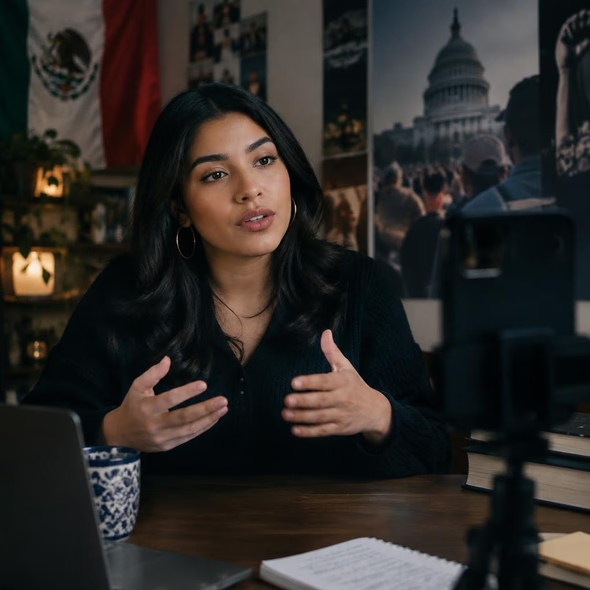
The strategy makes sense if Democrats have messages voters would consider but rarely encounter. It is less convincing if the obstacle is dissatisfaction with what the party offers. Creators can improve access without agreeing to lend their credibility, and the distinction should shape how success is measured.
Democrats are turning to Latino content creators to help recover support among Latino voters, NPR reports. The report’s summary describes voters who have soured on both parties, not simply voters waiting for a Democratic message. The available source summary does not identify individual creators or establish their arrangements with campaigns. Payment, scripts, and endorsement commitments therefore cannot be assumed.
Granted, the strongest case for the strategy is straightforward. A creator with an established audience may explain a policy in familiar language, draw attention to an overlooked proposal, or invite questions that a conventional campaign appearance never receives. If the problem is that voters rarely encounter useful information from Democrats, a different messenger could help. Dismissing that possibility as mere packaging would confuse an unfamiliar channel with an empty message.
Still, reach, credibility, and persuasion are separate achievements. A video view establishes exposure, not agreement. Trust in a creator’s judgment on one subject does not necessarily extend to a party recommendation. The campaign can book the messenger; confidence is not included. Even an enthusiastic response from existing supporters would tell Democrats little about voters whose preferences remain unsettled.
The incentives also differ. Campaigns want favorable attention and, ultimately, votes. Creators have reasons to protect the audience relationships that make their participation valuable. Depending on the arrangement, that could mean explaining a proposal, questioning a candidate, or declining to endorse anyone. Access to a creator should not be treated as control over the creator’s voice. Where money or editorial conditions exist, disclosure would help viewers assess the message; this reporting summary does not establish either.
The strategic fork is whether Democrats face a communication failure or an offer voters find unconvincing. Both problems can exist at once. If dissatisfaction concerns party commitments or performance, a clearer delivery system may expose the objection rather than resolve it. Latino voters also need not share one grievance or one preferred messenger. An outreach effort that permits substantive questions could produce useful feedback even without immediate persuasion. An effort that measures only favorable exposure could miss that value.
The case would strengthen if outreach reached previously disengaged voters and credible comparisons showed changes in their preferences. Audience questions and responses could reveal whether viewers understood the message or rejected its substance. The case would weaken if large view counts accompanied unchanged preferences, especially if campaigns presented those counts as electoral gains. Until those signals appear, creator outreach is a plausible communication tool, not evidence that Democrats have repaired the reasons voters distrust them.
Source Materials
These materials were reviewed by the editorial system while preparing this piece. Muerte.casa may interpret, satirize, reframe, or disagree with them.
- After losing ground with Latino voters, Democrats are turning to influencers for help NPR · October 10, 2026 · Primary signal · Direct source
How did this story land?
This may be changed as you like.