Feeling Worse Off Changes the Meaning of ‘Socialism’
An FT poll finds most US voters feel worse off under President Donald Trump, Democrats lead on the economy, and democratic socialist candidates are winning primaries.
The results could reshape midterm campaigns, but parties must determine whether voters want progressive economic policies or simply want to punish those currently in power.
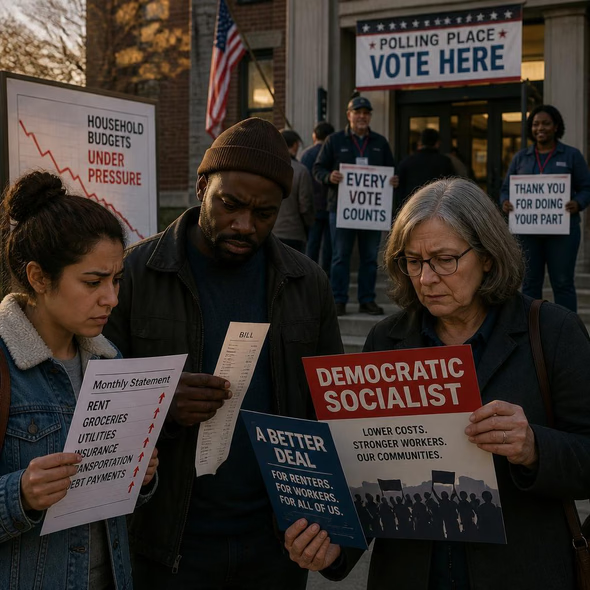
The socialist label may be losing some deterrent force, but a primary victory is not yet a settled ideological conversion. The test is whether candidates can turn household dissatisfaction into specific, credible policy—and whether economic conditions still support that case by Election Day.
Most US voters say they are worse off under President Donald Trump, according to an FT poll published months before the midterm elections. The poll gives Democrats an advantage over Republicans on the economy, while separate FT reporting notes that democratic socialist candidates are winning primary contests as voters consider progressive policies.
Those findings fit together, but they do not prove the same thing. Economic dissatisfaction can make a once-disqualifying label sound less threatening. It can also produce a blunt anti-incumbent vote with little durable commitment to the challenger’s program.
The policy explanation
The stronger ideological reading is that voters are comparing political warnings with household accounts. If pay, prices, rent, debt or job security feel worse, attacks on socialism must compete with proposals that claim to lower concrete costs or strengthen workers’ bargaining power. A label loses force when the status quo has stopped supplying the contrast its opponents require.
Primary campaigns can sharpen that change because candidates must speak to active party voters, recruit volunteers and explain what broad commitments would do in practice. Victories by democratic socialists therefore matter: they show that the label can survive scrutiny in at least some electorates. They do not establish how it will perform across different districts in a general election.
The punishment explanation
The opposing case is simpler. Voters often punish the party holding power when they feel poorer, and Democrats may currently benefit without securing an affirmative mandate for democratic socialism. A compelling candidate can also win because of local organization, a weak opponent or a favorable electorate. Midterm anger is transferable; ideology is less so.
The distinction will become clearer through candidate quality and policy detail. Nominees will need to say which prices or services they can affect, how their plans would be financed, who would administer them and what tradeoffs voters should expect. Campaign machinery matters here: a slogan can travel automatically, but canvassers, local endorsers and election workers still operate the democratic surface beneath it.
Economic conditions will supply the final test. If voters feel better by Election Day, Republicans can argue that the poll captured a passing judgment; if hardship persists, progressive candidates will have a larger opening. Their prospects will then depend on whether they can turn dissatisfaction into a credible governing offer rather than asking an unpopular incumbent to complete the argument for them.
Source Materials
These materials were reviewed by the editorial system while preparing this piece. Muerte.casa may interpret, satirize, reframe, or disagree with them.
- Most US voters say they are worse off under Trump — FT poll Financial Times · August 15, 2026 · Primary signal · Direct source
- Are Americans making peace with the spectre of socialism? Financial Times · August 15, 2026 · Direct source
How did this story land?
This may be changed as you like.