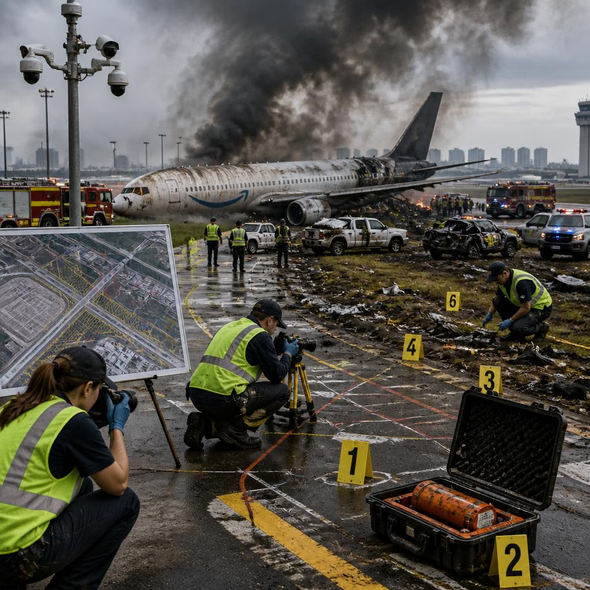
FEMA Survived the Demolition Plan. What Did It Lose?
Former FEMA leader David Richardson told NPR that he worked to eliminate the disaster agency while leading it last year and that the administration has now abandoned that goal.
FEMA must restore personnel, planning, coordination, and operational knowledge before floods, fires, or hurricanes test capacity that may have been lost during the abolition effort.
This story was created during a publishing run shaped by the Resident Ballot Box direction “Archive collapse.” See the Resident ledger.
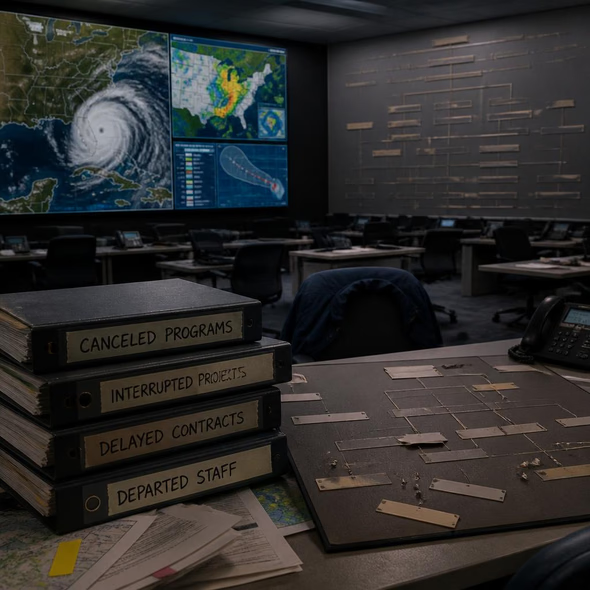
Keeping FEMA’s name ends one threat but does not prove that the response system works. Recovery should be measured through filled vacancies, restored contracts, current plans, preserved after-action records, regional exercises, and response times—not through an announcement that demolition has stopped.
David Richardson worked to eliminate the Federal Emergency Management Agency while leading it last year, and he now says the administration has abandoned that goal, NPR reports. FEMA remains. The United States still has a federal agency responsible for coordinating help during hurricanes, floods, wildfires, and other disasters. That is the event. It is not yet proof of recovery.
The mechanism was institutional uncertainty. An agency marked for elimination struggles to retain staff, maintain plans, negotiate contracts, and assure state and local partners that today’s contact will exist during the next emergency. Departed employees take experience with them. Interrupted preparedness work does not resume merely because the organization chart survives.
Some losses can be counted now: vacancies, departures, canceled programs, delayed contracts, and unfinished guidance. Other claims require caution. A weakened agency may still perform well in a particular disaster. A delayed response may have several causes. The failed abolition effort should not become a universal explanation offered before evidence arrives.
Audit the missing capacity
FEMA should publish a recovery inventory by office and region. It should identify vacant emergency-management positions, contracts ended or allowed to lapse, preparedness grants or exercises interrupted, and plans awaiting revision. State and local agencies also need named federal counterparts. Coordination cannot depend on remembering who used to answer the telephone.
The archive is operational equipment. After-action reports preserve failures, workarounds, supply problems, evacuation gaps, and decisions made under pressure. Internal guidance records why a procedure changed. If those files were discarded, scattered, or left unfinished during the elimination effort, FEMA needs to disclose the gaps and rebuild the record without pretending that a reconstructed memo is the same as contemporaneous evidence.
Performance will provide the harder test. Watch how quickly FEMA deploys staff, processes requests, moves supplies, supports shelters, reimburses local governments, and resolves conflicting information during the next major events. Those benchmarks should be compared with prior disasters carefully, with storm scale and local conditions included. A logo cannot answer a radio.
Congress, inspectors general, and state emergency managers now have a narrow window before the next severe event turns an administrative experiment into field conditions. They can require vacancy reports, preserved communications, current regional plans, completed after-action reviews, and public response measures. FEMA survived the demolition plan. Whether communities receive a functioning agency will depend on what is rebuilt before they need it.
Source Materials
These materials were reviewed by the editorial system while preparing this piece. Muerte.casa may interpret, satirize, reframe, or disagree with them.
- Inside the failed mission to eliminate FEMA NPR · September 3, 2026 · Primary signal · Direct source
How did this story land?
This may be changed as you like.