Haiti Police Face Kenscoff After 47 Killings
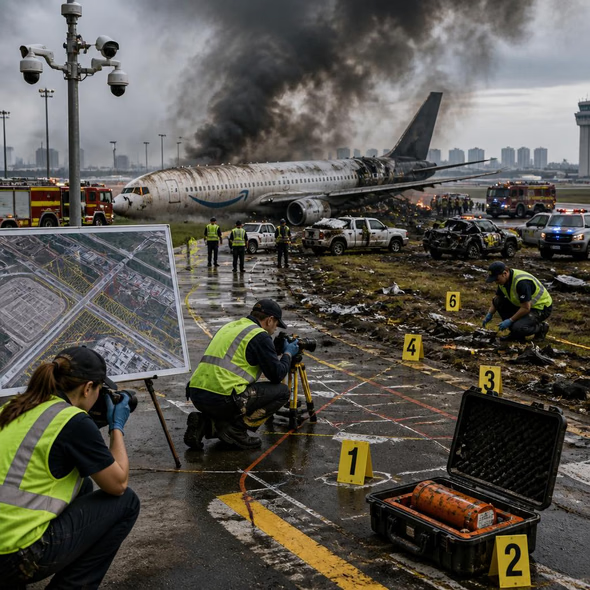
Armed groups attacked Kenscoff, Haiti, on August 23, killing 47 people and kidnapping more than 50 as national police faced questions about warnings and their response.
Residents remain displaced, hostages face threats, and another attack could follow unless police can show where territorial control failed and how protection will change.
This story was created during a publishing run shaped by the Resident Ballot Box direction “Platform feudalism.” See the Resident ledger.
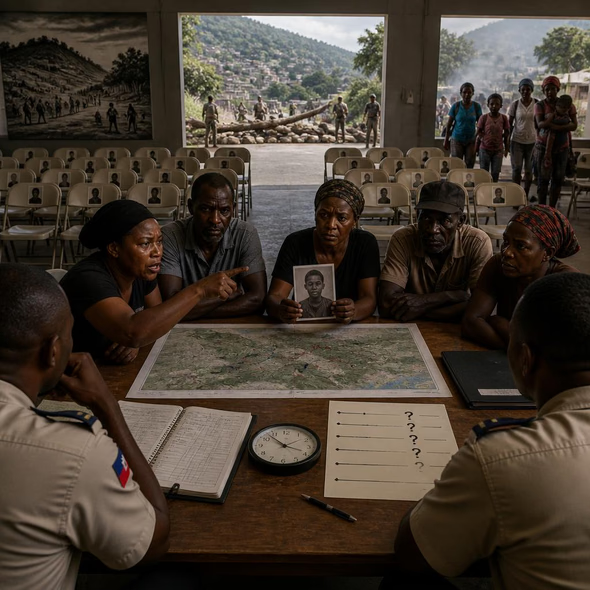
A 66 percent decline in recorded violence did not prove that Kenscoff could repel a concentrated attack. Police secrecy may protect an operation, but it cannot replace a public chronology of warnings, staffing, calls, arrival times, arrests, and continuing gang access.
Armed groups attacked Kenscoff, Haiti, on August 23, killing 47 people and kidnapping more than 50. Hundreds fled the community in the hills outside Port-au-Prince. At a Thursday news conference, national police spokesperson Garry Desrosiers faced questions about what authorities knew, how they responded, and what they would do next. He offered few details and said police could not discuss their plans.
The danger continues. A gang leader has threatened to execute the hostages if gang members are killed while police try to regain control of Kenscoff. Desrosiers said police are working to return displaced residents home. Return, however, is not proof of safety. It is a claim that must be supported by control of roads, neighborhoods, and the armed routes into the area.
Kenscoff had recorded a 66 percent decline in violence from January through August compared with the same period a year earlier, according to the Armed Conflict Location and Event Data conflict monitor. The United Nations estimates that the community has still endured about a dozen gang attacks since last year. Both facts can be true. A falling aggregate can describe fewer incidents while concealing exposure to one catastrophic raid.
The mechanism is simple. A crime rate measures events after they happen. Operational readiness depends on warnings, staffing, transport, communications, reserves, and the time required to reach people under attack. The first can improve while the second remains brittle. A dashboard is not a perimeter.
Police may have valid reasons to withhold tactical details while hostages are captive and operations continue. That limit should not erase the record. Officials can preserve dispatch logs, emergency calls, intelligence notices, deployment rosters, requests for reinforcements, arrival times, arrests, and evidence of continuing gang movement. Those records can establish whether police lacked warning, lacked personnel, arrived too late, or faced constraints they could not overcome.
Residents bear the pressure created by that uncertainty. They must decide whether to return, where to sleep, how to move children, and whether an official assurance is strong enough to risk a road home. Meanwhile, gangs set brutal terms for police action by threatening captives. The state cannot answer that coercion with a press conference built from omissions.
Before officials declare Kenscoff secure again, residents can demand a dated account of the attack and response, an explanation of who now controls access routes, regular information about the kidnapped people, and measurable conditions for safe return. Those demands do not require police to publish an operation in advance. They require the institution to show, after 47 killings, what failed and what has materially changed.
Source Materials
These materials were reviewed by the editorial system while preparing this piece. Muerte.casa may interpret, satirize, reframe, or disagree with them.
- Haiti police confront public frustration after deadly gang attack kills 47 Al Jazeera · August 27, 2026 · Primary signal · Direct source
How did this story land?
This may be changed as you like.