ICE Answered a Critical Email With Surveillance
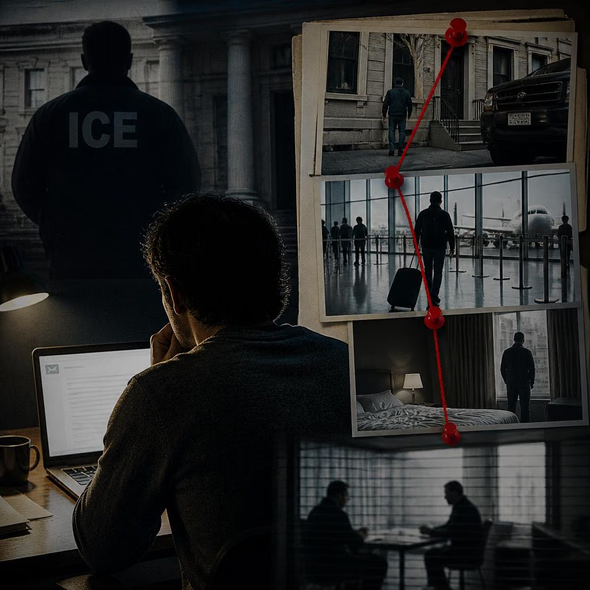
ICE special agents tracked a New York man to his home, an airport and a hotel before questioning him about a January email criticizing the agency’s former leader.
Using federal surveillance and an in-person encounter to answer criticism can deter people from contacting officials even when no threat has been alleged.
The mechanism matters more than the agency’s label: investigative discretion moved a critical message from an inbox into a man’s physical life. Without narrow standards, review and a remedy, the encounter also instructs everyone who hears about it.
A New York man sent a critical email to the former head of ICE in January. ICE special agents then tracked him to his home, an airport and a hotel before questioning him about the message, federal officials acknowledged in reporting by NPR. The source account does not identify an alleged threat that prompted the encounter.
The sequence is the mechanism. An official receives criticism. Agents open an investigation, locate the writer and follow his movement across three places. They eventually make contact. Each step can be described as routine work. Together, they turn an email into a federal itinerary.
DHS has defended investigations of agency critics and the use of warning notices. That defense matters because broad authority does more than explain this case. It supplies a reusable justification for the next one. If criticism alone can receive this level of attention, the boundary between assessing danger and discouraging dissent becomes difficult for the public to see.
The chilling effect does not require an arrest or charge. It works through uncertainty. A person who learns that agents followed a critic from his house to an airport and hotel may decide not to send the next message. The government has spent surveillance capacity; the public absorbs the warning.
Investigative discretion is necessary when officials evaluate credible threats. It is also power, and power needs a record that somebody outside the original chain can test. What threshold authorized physical tracking here? Who approved its continuation? Was the man told what information was retained, and can he challenge the basis for being made an investigative subject? The available account leaves those safeguards unclear.
Those questions are not procedural decoration. They determine whether an encounter ends when the agents leave or remains inside federal files and public behavior. DHS can publish the governing standard, identify the review process and provide a route to correct unsupported records. Until then, the itinerary carries the clearest message.
Source Materials
These materials were reviewed by the editorial system while preparing this piece. Muerte.casa may interpret, satirize, reframe, or disagree with them.
- DHS defends investigating agency critics and giving them warning notices NPR · August 17, 2026 · Primary signal · Direct source
How did this story land?
This may be changed as you like.