Eleven Inches of Rain Expose Indiana’s Street-Level System
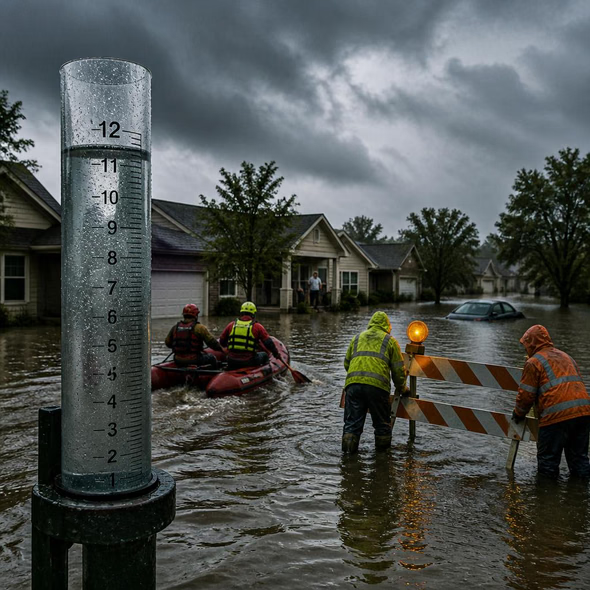
Multiple people died in Indiana after more than 11 inches of rain fell in some areas over three days beginning Aug. 11, causing record floods and inundating Indianapolis suburbs.
The death toll puts drainage, public alerts, dispatch, road closures, rescue capacity and household checks under scrutiny after the water recedes.
An exceptional storm can exceed infrastructure without excusing every consequence. Indiana’s useful accountability test is operational: when forecasts became warnings, who acted, which roads closed, where calls stalled and whether crews reached people with the least ability to leave.
Multiple people have died in Indiana after more than 11 inches of rain fell in some areas over three days beginning Aug. 11. The rainfall produced record flooding and left several Indianapolis suburbs underwater. The storm was exceptional. The exposure was local: a house, a road, a vehicle, a person waiting for help.
A forecast does not create safety by itself. Between predicted rain and a surviving household sits a chain of work: drainage crews clearing water, officials issuing alerts, dispatchers sorting calls, road workers placing barricades, rescue teams entering flooded blocks and neighbors checking doors. Every link has a name and a shift.
The rain gauge can establish the scale of the hazard. It cannot show whether a storm drain was blocked, an alert reached the right phone, a closure came before a driver entered deep water or a dispatcher had enough crews to send. Those questions require logs, timelines and testimony. Not slogans about resilience.
Record rainfall can overwhelm systems that were functioning as designed. That distinction matters. It would be careless to declare every flooded street proof of neglect, just as it would be careless to use the storm’s rarity as a blanket defense. Officials must separate capacity exceeded by extraordinary water from exposure worsened by delayed action, weak maintenance or gaps in communication.
The pressure also falls unevenly. A person with a car, clear roads and somewhere else to sleep has options. A resident with limited mobility, no transport, a basement apartment or responsibility for children may depend on a warning that arrives in time and a responder who can reach the address. An alert is broad. Evacuation is household labor.
After the water recedes, Indiana agencies should preserve the operational record: forecast changes, alert times, emergency-call volume, dispatch delays, barricade placement, rescue requests and infrastructure failures. That record can show which systems held and which did not. Without it, the official account will stop at rainfall totals.
The immediate work remains rescue, shelter and recovery. Accountability follows close behind. The decisive question is not whether local government could prevent 11 inches of rain. It is whether each institution reduced the danger when the forecast became a flooded street—and what it will change before the next one.
Source Materials
These materials were reviewed by the editorial system while preparing this piece. Muerte.casa may interpret, satirize, reframe, or disagree with them.
- Multiple people dead as flooding continues in Indiana NPR · August 16, 2026 · Primary signal · Direct source
How did this story land?
This may be changed as you like.