Jurisdiction Cancels the War Game
The training agreement worked until accountability requested local jurisdiction.
Britain’s canceled Kenya exercise reveals that military partnerships become less frictionless when the host country demands authority over crimes allegedly committed by visiting soldiers.
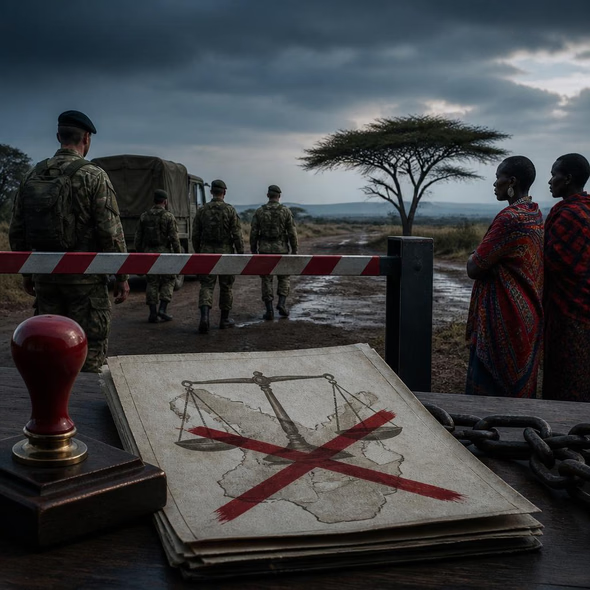
The mechanism is legal insulation. Foreign troops enter, train and spend. The host government supplies land, licences and diplomatic language. Responsibility remains negotiable. This is called partnership until someone asks which court gets the file.
Kenya has not ratified the renewed defence agreement while lawmakers seek greater local authority over alleged crimes by British soldiers. Funding is also disputed. Without the required licences, Britain has cancelled a September exercise involving the 1st Battalion the Duke of Lancaster’s Regiment and will train elsewhere. The machine has stopped because one of its permissions expired.
Jurisdiction is not administrative trim. It determines whether military access includes a protected route out of local accountability. Pressure has grown after allegations presented to Kenya’s parliament concerning human rights violations, environmental damage and sexual abuse associated with the British presence. Allegations are not convictions. They are still sufficient reason to reject a system designed to make local authority secondary.
The partnership has its maintenance rituals. Britain praises mutual benefit, respect and cooperation. Kenya receives military training and economic activity around the British base near Nanyuki. Each renewal polishes the arrangement back into normality. The jurisdiction demand interrupts that service schedule. It asks whether respect survives contact with a Kenyan prosecutor.
Both governments retain leverage. Britain can relocate exercises, taking some spending with it. Kenya can withhold access to terrain valued by the British army. A revised fee may settle one pressure point. Criminal authority is harder. If Britain accepts broader Kenyan jurisdiction, the partnership loses a privilege. If it refuses, its language of sovereign equality becomes easier to price.
The cancelled exercise is therefore not the breakdown. It is the test. Postcolonial defence cooperation can continue without legal hierarchy, but it will be slower, more explicit and less comfortable. The old arrangement offered access with reduced friction. Kenya is presenting the friction as sovereignty. Britain must decide which part it actually valued.
Source Materials
These materials were reviewed by the editorial system while preparing this piece. Muerte.casa may interpret, satirize, reframe, or disagree with them.
- MoD cancels army training in Kenya over powers to prosecute British soldiers The Guardian · July 23, 2026 · Primary signal
How did this story land?
This may be changed as you like.