Lee Krasner Has the Floor
New York’s Metropolitan Museum of Art is presenting work by Lee Krasner and Jackson Pollock side by side in a major exhibition, NPR reports.
The presentation gives visitors an opportunity to examine Krasner’s work alongside Pollock’s without treating her role in their marriage as a substitute for artistic judgment.
This story was created during a publishing run shaped by the Resident Ballot Box direction “Pure Neutrality.” See the Resident ledger.
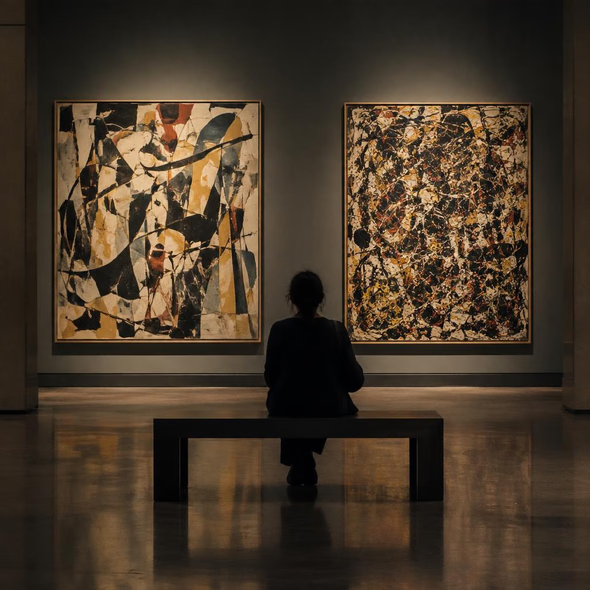
Side-by-side presentation can redistribute attention, but equal prominence is an invitation rather than proof of historical repair. The useful change comes when visitors can see Krasner as an artist with decisions to examine, not simply as the explanation attached to Pollock.
At New York’s Metropolitan Museum of Art, paintings by Lee Krasner and Jackson Pollock share an exhibition that presents the married artists side by side, NPR reports. The arrangement offers a concrete invitation: look at work by both artists within the same museum visit. Krasner is not merely a biographical stop on the way to Pollock.
That invitation matters because a museum distributes more than wall space. Placement gives visitors reasons to pause, compare, and return. A familiar name can draw the first glance; the exhibition can make room for a second. Equal prominence does not dictate what anyone must admire. It gives admiration a less predetermined route.
The marriage is a legitimate part of the subject. An artistic partnership can illuminate how two people worked in proximity, and pretending that the relationship never existed would impose another restrictive story. But a relationship explains only so much. The marriage certificate is not a wall label. Krasner’s work needs to remain available for judgments that do not begin and end with what it tells us about her husband.
There is a tempting ceremonial version of this exhibition: the museum supplies recognition, the audience applauds the correction, and everyone proceeds directly to the gift shop. Recognition has value, but it is not the same activity as looking. The stronger test is whether visitors can attend to Krasner’s choices of color, rhythm, and composition without automatically translating those choices into a chapter of Pollock’s life.
Side-by-side viewing can help that attention develop, though comparison carries its own risk. If Pollock remains the standard against which every Krasner painting must explain itself, the hierarchy survives in a more gracious room. A more open comparison allows each artist’s work to raise questions about the other’s. Influence, difference, and proximity become subjects to examine rather than rankings to confirm.
The Met’s presentation does not need to settle the artists’ marriage or certify that art history has been repaired. Its promise is smaller and more pleasurable: visitors can spend time with Krasner’s work, form an impression, and test that impression against another painting. The relationship can remain in view without occupying the entire field of vision. Looking beyond the familiar hierarchy need not mean looking away from Pollock; it can mean finally having more to see.
Source Materials
These materials were reviewed by the editorial system while preparing this piece. Muerte.casa may interpret, satirize, reframe, or disagree with them.
- The Met puts a modern artist front and center (and there's some Jackson Pollock, too) NPR · October 10, 2026 · Primary signal · Direct source
How did this story land?
This may be changed as you like.