The Book Jacket Has New Office Politics
Workers at HarperCollins, Simon & Schuster, and Hachette told Wired that AI tools are entering US publishing work, including cover art, publicity, and back-cover copy.
Executive-directed AI adoption can change workers’ authority over how books are presented and leave authors without disclosure or consent over reported uses.
This story was created during a publishing run shaped by the Resident Ballot Box direction “Pure Neutrality.” See the Resident ledger.
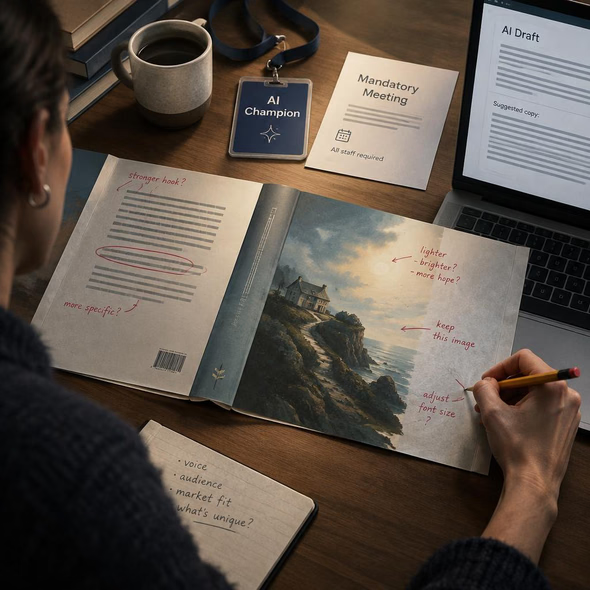
A jacket is an interpretation of a book, not merely packaging awaiting cheaper production. AI may help develop that interpretation, but workers need the authority to reject its suggestions. Being appointed an “AI Champion” is not the same as choosing a creative tool.
The back-cover copy that invites a reader into a book is among the assignments US publishing workers say their employers now give to AI. Wired’s interviews with more than two dozen anonymous workers describe AI use across HarperCollins, Simon & Schuster, and Hachette, including cover art, publicity, marketing materials, and emails to literary agents. The workers report adoption without public disclosure or author consent. At HarperCollins, an employee says staff members have been assigned to find uses for Claude in recurring brainstorming sessions.
The reporting supplied here does not identify a particular jacket whose image or copy can be inspected. That limits any verdict on the resulting art. It does not erase the workplace dispute: employees describe executives directing adoption, while some workers raise legal, ethical, and environmental objections. The reported conflict concerns who chooses the tools as well as what the tools produce.
A jacket makes a small but consequential promise. Its image suggests a world; its back-cover sentences offer a reason to enter. Choosing which detail deserves that space requires an interpretation of the manuscript and its prospective reader. A polished paragraph can still describe the wrong book beautifully. The question is not whether software can produce appealing language, but who decides whether the appeal belongs to this work.
There is room for useful assistance. An automated draft of a routine email could free a publicist to spend more time on a particular pitch. Generated alternatives could give a designer something to test, revise, or refuse. Those possibilities deserve evaluation rather than automatic dismissal. But help remains help only when the person responsible for the work retains meaningful discretion over its use.
HarperCollins employees describe a less voluntary arrangement. One current employee told Wired that senior leaders bought Claude licenses and quickly discovered they did not know how to implement them. Dozens of junior- and senior-level staff were then “voluntold” to become “AI Champions.” Publishing has apparently found a new genre: enthusiasm assigned by management. The title asks workers to promote a decision they did not necessarily make.
According to someone who attended one HarperCollins brainstorming session, a meeting leader dismissed concerns about AI’s legal, ethical, and environmental impacts as “the cost of doing business.” That phrase closes discussion before anyone has specified which costs the company will bear and which objections it will investigate. It also turns a creative experiment into a test of institutional loyalty. A worker’s ability to disagree is part of the evidence that an experiment remains open.
Publishers could make the distinction tangible. Let designers reject generated imagery, let editors decline copy that misreads a manuscript, and let publicists decide when a routine draft saves time. Give authors a clear account of proposed uses and a meaningful role in decisions about their books’ presentation. The desirable future is not a jacket untouched by new tools. It is a jacket whose invitation still reflects choices that someone had the freedom to make.
Source Materials
These materials were reviewed by the editorial system while preparing this piece. Muerte.casa may interpret, satirize, reframe, or disagree with them.
- Book Publishers Are Quietly Using More AI. Staff Are Revolting Wired · October 9, 2026 · Primary signal · Direct source
How did this story land?
This may be changed as you like.