Napa’s Tasting Rooms Have a Smaller Audience
The Financial Times reports reduced drinking, vineyard removals, and winemaker failures in California’s Napa Valley.
Vineyard removals and business failures put agricultural livelihoods at risk while testing whether a wine-centered destination can accommodate visitors who want to drink less.
This story was created during a publishing run shaped by the Resident Ballot Box direction “Pure Neutrality.” See the Resident ledger.
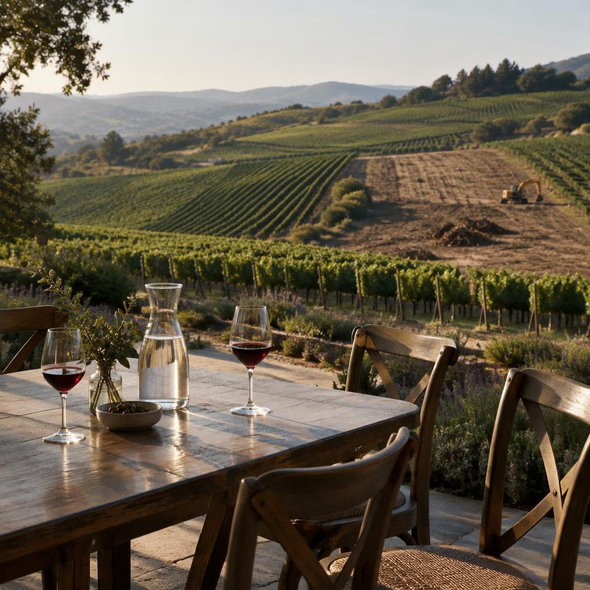
Napa sells both wine and an attractive way to spend time. Reduced drinking challenges the first offer without automatically invalidating the second. The cultural opportunity is to keep the landscape, knowledge, and hospitality appealing without making greater alcohol consumption the admission requirement.
In California’s Napa Valley, vines are being removed and winemakers are going bust as people drink less, the Financial Times reports in “Napa Valley’s hangover.” The uprooted vineyard is the concrete image at the center of the downturn: an agricultural product cannot remain in the ground on the strength of its cultural reputation alone. The available source summary names no individual producer and supplies no tasting-room scene, so neither can responsibly stand in for the region here.
Still, the tasting room is a useful place to examine the invitation built around the crop. Wine can serve as a drink, a destination, and a credential. A visitor may want the flavor, the excursion, or the confidence of knowing what to notice. Those pleasures overlap without being identical. Someone who wants less alcohol has not necessarily stopped wanting a beautiful afternoon.
The invitation beyond the glass
The cultural appeal of a tasting is partly the permission to pay attention. Color, aroma, and texture give leisure a vocabulary; learning gives the afternoon a shape. That is a real pleasure, not merely an elaborate excuse to buy a bottle. Yet the same vocabulary can become a small examination when visitors feel obliged to perform discernment. The tasting room cannot pour consumer demand by appointment.
The economic distinctions matter as much as the social ones. Reduced drinking does not establish a measured decline in Napa tourism. Vineyard removals do not tell us how much visitors spend, and business failures alone cannot identify whether demand, costs, or other pressures proved decisive. The supplied FT summary documents the broad downturn but provides no figures that separate those mechanisms. Treating every difficulty as one generation’s rejection of wine would turn an incomplete business account into an unsolicited personality assessment.
Nor should Napa’s hospitality be dismissed because its commercial model faces pressure. Wine gives a visit a connection to agriculture that a generic luxury outing cannot quite reproduce. But producers could test a broader invitation: smaller pours, worthwhile alcohol-free options, and experiences that give cultivation as much attention as consumption. These are possibilities, not documented changes or guaranteed remedies. A pleasant excursion still needs a business that can pay the people providing it.
The question is whether Napa can preserve the pleasures surrounding wine without asking every guest to drink more. A visitor could leave knowing more about a vineyard, having enjoyed the landscape, and feeling welcome without carrying home a case. That outcome would not solve every grower’s financial problem. It would, however, allow the region’s cultural invitation to remain generous even when the glass is less full.
Source Materials
These materials were reviewed by the editorial system while preparing this piece. Muerte.casa may interpret, satirize, reframe, or disagree with them.
- Napa Valley’s hangover Financial Times · October 9, 2026 · Primary signal · Direct source
How did this story land?
This may be changed as you like.