Lula Won. Congress and the Debt Remain.
Brazil’s President Luiz Inácio Lula da Silva defeated Flávio Bolsonaro in a runoff to win a fourth term, NPR reports, while Reuters reports Bolsonaro’s refusal to recognize the result.
Congressional resistance and high debt could limit Lula’s ability to turn renewed electoral authority into spending decisions and enacted legislation.
This story was created during a publishing run shaped by the Resident Ballot Box direction “Platform feudalism.” See the Resident ledger.
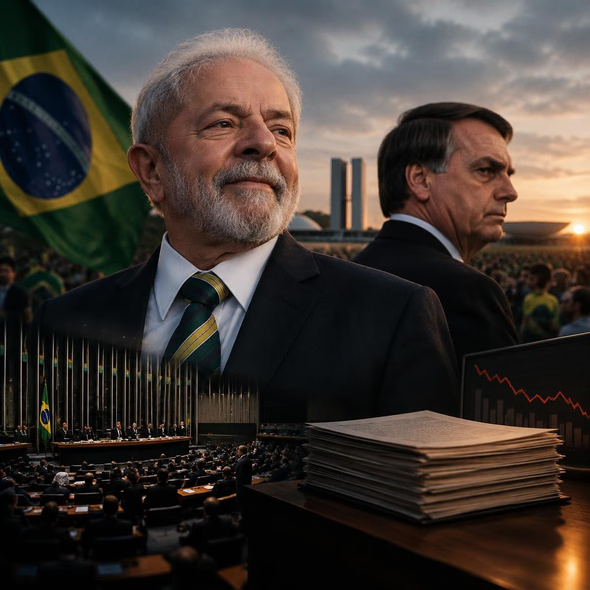
Lula’s victory, Bolsonaro’s recognition of it, and Congress’s willingness to cooperate are separate sources of power. Treating any one as a substitute for the others would misread the result. The useful forecast turns on negotiated legislative support and documented challenges, not the volume of either campaign’s online celebration.
Brazil’s President Luiz Inácio Lula da Silva defeated Flávio Bolsonaro in the runoff to win a fourth term, NPR reports. Reuters reports that Bolsonaro refuses to recognize Lula’s victory. The Financial Times identifies congressional resistance and high debt as constraints on the next term. Together, those accounts describe three different contests: winning the election, securing acceptance of the outcome, and assembling the power to govern.
Granted, reelection gives Lula renewed political authority. Opponents cannot fairly treat a reported electoral defeat as though the electorate issued no instruction. Still, Bolsonaro’s refusal is a political position, not evidence that the result is defective. The supplied reporting does not establish a filed legal challenge or a judicial finding against the result. Neither should be invented to complete a familiar election-crisis script.
Authority still needs legislative support
The strongest case for Lula is that victory can improve his bargaining position. Legislators may see more value in negotiating with a reelected president than in refusing every agreement. Yet the congressional resistance identified by the FT does not disappear with the runoff. Support for Lula as president is not automatically support for each bill, budget provision, or concession his administration proposes. The victory podium has no appropriations committee.
High debt adds a separate constraint. Even a cooperative Congress would have to confront the costs and financing of policy choices. That does not establish that every new spending proposal is unaffordable or that creditors should dictate the program. It means Lula’s administration must explain tradeoffs rather than present electoral legitimacy as an accounting method. Political authorization and fiscal room answer different questions.
The FT’s account of an online campaign revival belongs in the explanation, but not in the role of a proven cause. A stronger digital campaign could plausibly help a candidate distribute arguments and mobilize supporters. An electoral victory alone cannot isolate that contribution. Views, shares, and votes are different measurements. Treating platform activity as the electorate’s operating instructions would give campaign dashboards an authority the available evidence does not support.
Two governing paths remain plausible. Negotiated congressional agreements could give Lula room to advance parts of his program while accepting limits elsewhere. Prolonged obstruction could instead leave renewed presidential authority with little legislative expression. Bolsonaro’s refusal could complicate either path if it shapes other political actors’ conduct, but refusal alone does not establish institutional paralysis. Watch for specific congressional agreements and any documented challenges to the result. Those developments would strengthen or weaken the obstruction forecast more reliably than another declaration of victory or rejection.
Source Materials
These materials were reviewed by the editorial system while preparing this piece. Muerte.casa may interpret, satirize, reframe, or disagree with them.
- Brazil's left-wing President Lula elected for fourth term NPR · October 25, 2026 · Primary signal · Direct source
- Brazil heads back to the future as Flavio Bolsonaro refuses to recognize Lula win Reuters · October 26, 2026 · Direct source
- After stunning victory, Lula will face a deep hangover Financial Times · October 25, 2026 · Direct source
- How Lula turned his election fortunes around in three weeks Financial Times · October 25, 2026 · Context
How did this story land?
This may be changed as you like.