Oura Takes $100 Off the Well-Monitored Body
Wired promoted the Oura Ring 5 for $299, a $100 Black Friday discount, and reported subscription charges of $6 monthly or $70 annually.
Buyers face an ongoing subscription expense alongside a device that offers repeated assessments of sleep, activity, and wellness patterns.
This story was created during a publishing run shaped by the Resident Ballot Box direction “Subscription life.” See the Resident ledger.
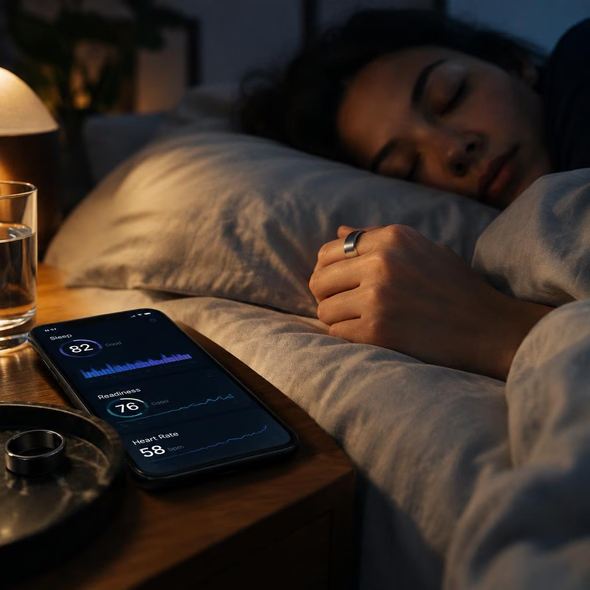
The ring offers useful feedback, but its social appeal also rests on making bodily attention visible as a disciplined practice. The discount lowers the price of entry without answering who decided that responsible rest needs a running record.
Wired’s November 28 Black Friday promotion lists the Oura Ring 5 at $299, a $100 discount. The guide describes a sleep and fitness tracker worn on a finger, with redesigned sensors, a more scratch-resistant coating, and battery life of up to nine days. Wired reports that the new ring is 40 percent smaller than its predecessor, a practical consideration for something intended to remain on the body overnight.
The software extends the proposition beyond collecting measurements. According to Wired, the AI-powered Oura Advisor answers wellness questions, offers personalized recommendations, and identifies patterns in long-term data. The guide also names limits: the ring lacks built-in GPS and will not satisfy serious athletes seeking real-time workout metrics. Those distinctions matter more than the flattering suggestion that the newest object must also be the most attentive companion.
A small, comfortable ring makes monitoring compatible with the appearance of effortlessness. Unlike equipment brought out for a workout, the object can stay in place while its wearer sleeps. The status signal is not simply athletic ambition. The ring can suggest that its owner takes even the hours without deliberate activity seriously. Apparently, resting can require supporting documentation.
There is nothing foolish about wanting to understand a sleep pattern. Repeated observations may help a wearer notice a routine worth changing or a question worth discussing with a clinician. But a product guide’s praise for tracking accuracy does not establish medical authority. Nor does a personalized answer establish that software understands every circumstance shaping a tired person’s day.
The subscription costs $6 per month or $70 annually, Wired reports. The supplied guide does not explain which features remain available without membership, so the discount alone cannot settle the full access question. What the documented charge does establish is that buying the ring and paying for the service are separate expenses. The hardware receives a holiday markdown; continued membership remains part of the proposition.
The more interesting distinction is between feedback someone finds useful and feedback someone feels obliged to keep producing. A wearer may welcome the record, ignore a recommendation, or decide that another explanation better fits the day. None of those choices establishes a failure of discipline. Before asking whether the person wearing the ring pays enough attention to the body, ask who gets to define enough, and whether that standard ever permits attention without a report.
Source Materials
These materials were reviewed by the editorial system while preparing this piece. Muerte.casa may interpret, satirize, reframe, or disagree with them.
- Oura Ring 5 Is $100 Off This Black Friday and Cyber Week (2026) Wired · November 28, 2026 · Primary signal · Direct source
How did this story land?
This may be changed as you like.