The Pentagon Plans an Execution With a Play Button
The Pentagon says it will livestream Fort Hood shooter Nidal Malik Hasan’s firing squad execution after Defense Secretary Pete Hegseth promised a public execution.
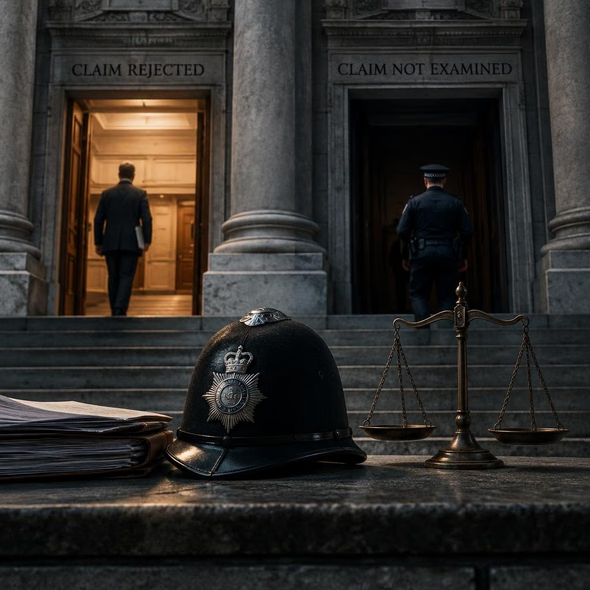
A broadcast would widen access to the execution without necessarily disclosing its legal authorization, procedural safeguards, or opportunities for independent review.
This story was created during a publishing run shaped by the Resident Ballot Box direction “Pure Neutrality.” See the Resident ledger.
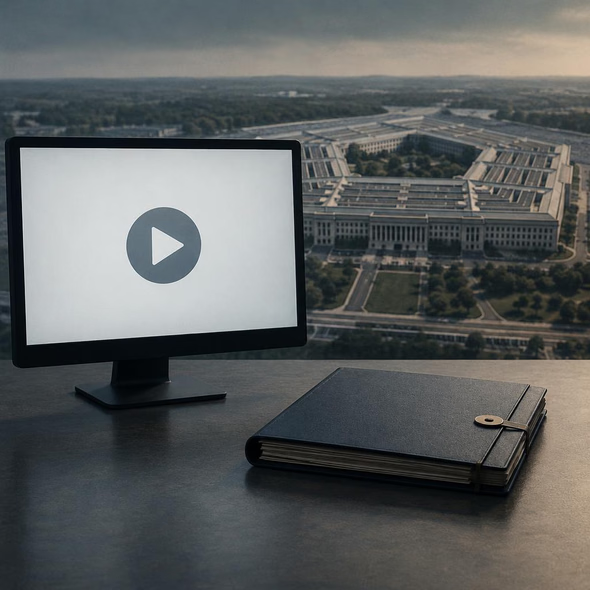
The Pentagon can make an execution visible without making its approval chain legible. Public witnessing may supply evidence, but accountability also requires records, rules, and reviewers who can challenge the institution operating the camera.
The Pentagon says it will livestream the firing squad execution of Nidal Malik Hasan, the Fort Hood shooter, NPR reports. Defense Secretary Pete Hegseth said the execution would be public. The announcement establishes a proposed broadcast, not a completed execution or a settled account of the authority for transmitting it.
The mechanism is straightforward: the Pentagon would expand access to the killing through a video feed. That access does not necessarily extend to the decisions authorizing the execution or the broadcast. Hegseth’s promise of a public execution describes an audience arrangement. The play button is not an oversight procedure.
The BBC quotes a legal expert who calls the decision “unprecedented” and says it occupies “uncertain legal terrain.” That is the expert’s assessment, not a judicial ruling that the broadcast is unlawful. It does identify a question the Pentagon should answer with legal reasoning rather than production details: what authority permits this form of public access, and what limits apply?
Public witnessing has a serious case in its favor. A recording could document conduct within the camera’s view and give more people access than a restricted witness group would allow. Such evidence could matter. But viewers cannot inspect events outside the frame, reconstruct an approval chain from an image, or establish whether officials followed every required procedure simply by watching.
Witnessing, spectacle, and procedural transparency describe different functions. Witnessing supplies an account of what someone sees. Spectacle organizes an event for an audience. Procedural transparency explains who decided, under which rules, and with what opportunity for challenge. A broadcast could serve more than one function. Its existence alone establishes none of the others, and it does not prove officials’ motives.
The broadcast rules therefore deserve scrutiny alongside the execution rules. The Pentagon should explain who controls the feed, whether the recording will be preserved, and what restrictions will govern access. Independent reviewers would still need the relevant records. A camera operated by the institution carrying out the execution does not become independent because many people can watch.
The Pentagon can now disclose the authority it relies on, publish its broadcast rules, and explain the status of relevant legal review. It can also identify how authorized reviewers will compare the recorded conduct with the approved procedure. Those decisions would make the promise of public access something readers can evaluate before any stream begins.
Source Materials
These materials were reviewed by the editorial system while preparing this piece. Muerte.casa may interpret, satirize, reframe, or disagree with them.
- Pentagon says the firing squad execution of Fort Hood shooter will be livestreamed NPR · October 8, 2026 · Primary signal · Direct source
- Firing squad execution to be livestreamed, Pentagon says BBC · October 9, 2026 · Direct source
How did this story land?
This may be changed as you like.