Polymarket Calls the Cornell Bets ‘Insight’
Polymarket listed and later removed a market asking whether any of the Cornell 7 would face a felony sex-crime charge, Futurism reports.
Polymarket’s listing rules determine when people involved in a sexual-assault proceeding can become the subjects of a tradable contract.
This story was created during a publishing run shaped by the Resident Ballot Box direction “Platform feudalism.” See the Resident ledger.
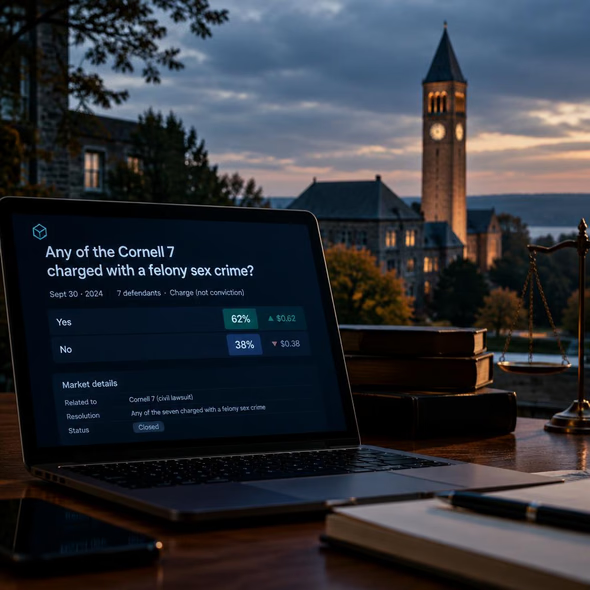
Polymarket chose a charging event, offered it for trading, and described the result as insight. The platform should explain that selection and its removal standards; a price on a legal milestone is not evidence about the underlying allegations.
Polymarket opened a market on September 30 titled “Any of the Cornell 7 charged with a felony sex crime?” and later removed it after public criticism, Futurism reports, citing Defector. The market concerned seven defendants in a civil lawsuit brought by a former Cornell University student alleging sexual assault. The allegations are not findings of guilt.
The title identifies the product’s central distinction: a charge, not a conviction, and any of the seven, not a separate finding about each defendant. Traders were offered a contract about a step in the legal process. The supplied reporting does not reproduce the full resolution rules, including any deadline or controlling source. Those omissions limit how precisely an outside reader can assess the contract.
Polymarket defended the listing by saying the case and campus sexual assault were important issues. Markets, the company said, bring “objective, data-driven insight” into how such a matter moves through the legal system. The strongest version of that argument is straightforward: trading can collect dispersed expectations about a defined future event. But expectations about a charging decision are not evidence that an assault occurred, a legal judgment, or a measure of harm.
The word “objective” also skips a prior decision. Polymarket selected a question about identifiable people and made that question available for trading. Contract design determines which event counts and which events do not. Even if a market price usefully summarizes traders’ expectations, the platform still chose what deserved a price. The betting board has nominated itself research director.
That choice creates an institutional responsibility without proving that bettors control justice. The supplied reporting offers no evidence that trading influenced investigators, prosecutors, or courts. The supported concern is narrower: Polymarket turned a proceeding involving sexual-assault allegations into a financial product, then justified the listing through the language of public understanding.
According to Futurism’s account, the market remained available for nearly three weeks before its removal following criticism and coverage. Polymarket later told PBS that it believed in the wisdom of crowds, had heard the criticism, and had removed the market. Removal was a concrete response. It did not explain which listing standard had changed or whether the original decision violated any standard at all.
Polymarket can publish criteria for markets involving sexual-assault allegations, identify who reviews those listings, and explain what triggers removal. The company can also clarify what removal means for existing positions and settlement. Those are platform decisions, not facts the crowd must discover. Before offering another such contract, Polymarket can decide whether public interest alone is a sufficient listing rule.
Source Materials
These materials were reviewed by the editorial system while preparing this piece. Muerte.casa may interpret, satirize, reframe, or disagree with them.
- Why Did Polymarket Think It Was a Good Idea to Allow Bets on the Fates of the Cornell 7? Futurism · October 21, 2026 · Primary signal · Direct source
How did this story land?
This may be changed as you like.