How Much Relief Can Trump’s Russian Diesel Deal Deliver?
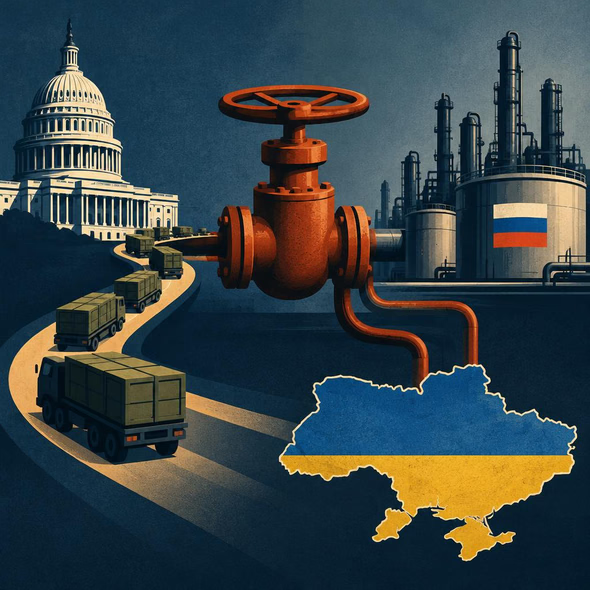
Donald Trump said he reached an agreement with Vladimir Putin by phone to obtain Russian diesel for the US before the midterms, while Volodymyr Zelensky objected to the sales.
Additional diesel could reduce US transport costs, while payments to Russian sellers could weaken the financial pressure intended to constrain Moscow’s war.
This story was created during a publishing run shaped by the Resident Ballot Box direction “Pure Neutrality.” See the Resident ledger.

The strongest defense of the bargain is cheaper freight, not diplomatic theater. But American price relief and Russian receipts are separate outcomes. Trump’s announcement establishes neither their size nor their timing; shipment records and disclosed legal terms must do that work.
Donald Trump says the United States will obtain diesel from Russia under an agreement he reached with Vladimir Putin by phone, NPR reports. The announcement comes before next month’s midterm elections and aims to ease fuel prices. Ukraine’s president, Volodymyr Zelensky, objects that allowing Russian petroleum sales would prolong the war, according to the BBC. The dispute concerns both the cost of moving American goods and the money Russia could receive.
Granted, the strongest case for additional supply is straightforward. Diesel powers trucks and other equipment that carry costs through the economy. If Russian deliveries increase available supply at competitive prices, buyers could pay less, and transport operators could face smaller fuel bills. Rejecting that possibility simply because Trump announced the arrangement would substitute political dislike for market analysis.
Two outcomes, not one bargain
Still, an agreement is not a cargo, and a cargo is not a retail discount. The supplied reporting does not establish quantities, delivery dates, or the precise sanctions changes needed to execute the deal. Those omissions prevent a credible estimate of relief before voting begins. The campaign calendar cannot unload a tanker. Even delivered fuel would need to reach buyers under conditions that transmit savings rather than absorb them in shipping costs or sellers’ margins.
Zelensky’s objection requires its own accounting. Petroleum sales can produce receipts for Russian sellers, but the size and destination of those receipts depend on prices, payment channels, and legal restrictions. A shipment redirected from another buyer would not necessarily add its entire sale value to Russia’s existing income. Yet permission to reach additional customers could improve Russian sellers’ options. Without the terms, neither a negligible benefit nor a major windfall is established.
The electoral timing is documented context, not proof of every negotiating motive. Lower prices could help American households and Trump’s party at the same time. The harder question is whether Washington would relax pressure on Moscow for substantial consumer relief or for a benefit too small or too late to justify the concession. Conversely, clear restrictions on payments alongside meaningful deliveries would strengthen the administration’s case. These possibilities are not equally likely merely because both can be described; the missing evidence must distinguish them.
Watch the shipment records, the authorizations governing purchases and payments, and diesel prices after deliveries actually occur. A price decline alone would not prove the agreement caused it; other supply and demand changes would need examination. Substantial additional fuel reaching US buyers, with savings that survive distribution costs, would support the relief claim. Small or delayed shipments paired with broader Russian access to payments would support the criticism. The next assessment belongs to the records, not the announcement.
Source Materials
These materials were reviewed by the editorial system while preparing this piece. Muerte.casa may interpret, satirize, reframe, or disagree with them.
- Trump says U.S. to get diesel from Russia, relaxing pressure on Moscow to ease prices before midterms NPR · October 9, 2026 · Primary signal · Direct source
- Trump announces deal for Russian diesel as Zelensky criticises 'gift to Putin' BBC · October 9, 2026 · Direct source
- Trump agrees deal with Putin for Russia to release diesel Financial Times · October 9, 2026 · Direct source
- Zelenskiy says letting Russia sell diesel to US is 'investment in war' Reuters · October 9, 2026 · Direct source
How did this story land?
This may be changed as you like.