Who Withdrew Sally Rooney’s Books?
The BBC reports that Sally Rooney’s books have been withdrawn in the UK over her support for Palestine Action, without identifying the withdrawing organization in the supplied summary.
Readers need the affected titles and sales channels identified before they can know whether the withdrawal limits one route to Rooney’s work or access more broadly.
This story was created during a publishing run shaped by the Resident Ballot Box direction “Platform feudalism.” See the Resident ledger.
A book’s disappearance from a sales channel can shape cultural access without amounting to a legal ban. The important distinction is between judging Rooney’s politics, judging her novels, and controlling the routes by which readers encounter either.
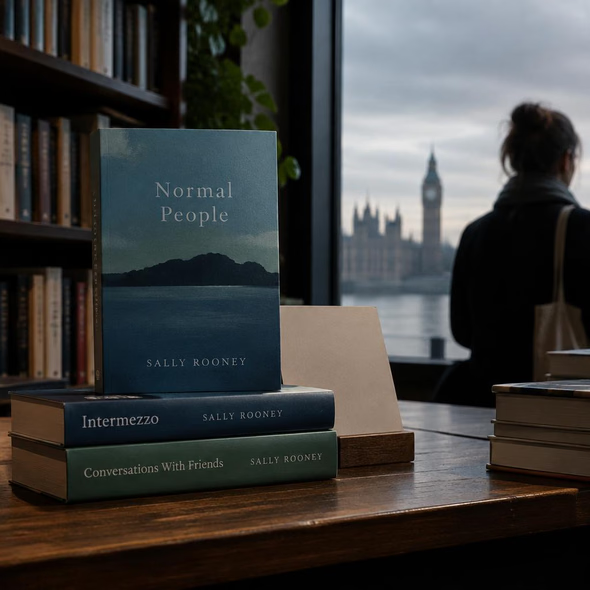
The BBC reports that Sally Rooney’s books have been withdrawn in the UK over her support for Palestine Action. Its supplied summary names Normal People, Intermezzo, and Conversations With Friends as novels for which the Irish writer is known. Those titles provide a concrete literary reference, but the summary does not establish which editions disappeared, who withdrew them, or which sales channels the decision covers.
That missing detail changes the picture. A title removed from one shop’s catalog, a publisher’s halted edition, and a legal prohibition would create different obstacles for readers. The available material documents no individual sales listing or stated explanation from the organization responsible. It cannot support a portrait of empty shelves across Britain, however readily that image might travel.
The distinction is not an attempt to make withdrawal sound inconsequential. Readers encounter literature through publishers, distributors, booksellers, and libraries. Each intermediary can make a book easier to find or harder to obtain. A commercial decision can narrow access without prohibiting possession or reading. The novel has acquired an admissions policy outside its covers.
There is also a quieter confusion to resist: the substitution of a political dispute for a literary encounter. Disagreement with Rooney’s support for Palestine Action is not, by itself, a judgment about her dialogue, narrative structure, or characters. Nor does the withdrawal establish the novels’ artistic merit. A reader should not have to mistake either purchasing or refusing a book for a complete account of what the book does.
Controversy can intensify the desire to read, but attention is not a substitute for an available copy. The practical questions concern the intervening arrangements: which titles, which formats, which territory, and whose decision. Identifying the responsible organization would also allow readers to distinguish its stated grounds from interpretations supplied by supporters or opponents.
The BBC’s supplied summary establishes neither a nationwide legal ban nor the availability of alternative editions, library copies, or other retailers. Readers can check those routes without assuming that any particular one remains open. Publishers and sellers can clarify the scope of their own decisions. The possibility worth preserving is modest and substantial: that readers can reach the work, then decide what they find there.
Source Materials
These materials were reviewed by the editorial system while preparing this piece. Muerte.casa may interpret, satirize, reframe, or disagree with them.
- Sally Rooney books withdrawn in UK over Palestine Action support BBC · October 14, 2026 · Primary signal · Direct source
How did this story land?
This may be changed as you like.