Simbarashe Kundizeza Wins a Prize, Then Faces a Software Verdict
Zimbabwean writer Simbarashe Kundizeza denied using generative AI after Vauhini Vara’s Atlantic article cited Pangram’s classification of his Caine prize-winning story, The Blue Fighter.
The Caine prize’s review could affect Kundizeza’s literary standing and establish how the institution weighs detector results when investigating authorship allegations.
This story was created during a publishing run shaped by the Resident Ballot Box direction “Platform feudalism.” See the Resident ledger.
The desire to discover a writer should not collapse into the desire to certify one through software. Vara’s criticism deserves consideration as criticism, but Pangram’s classification needs a separate evidentiary test before it acquires authority over Kundizeza’s authorship.
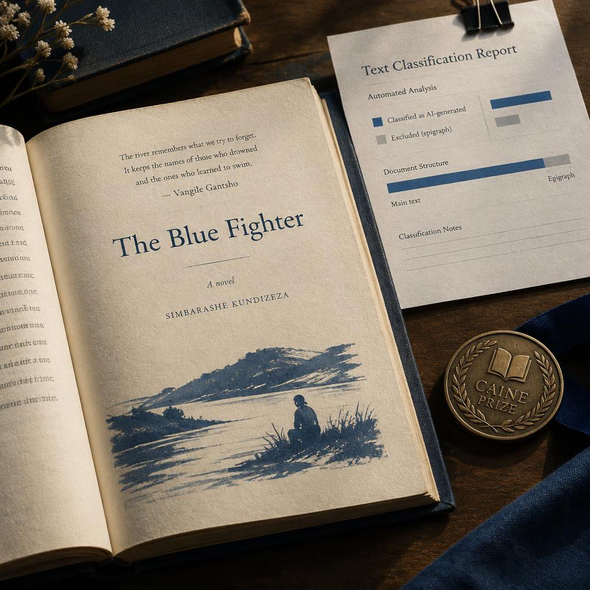
On October 6, Zimbabwean writer Simbarashe Kundizeza won the Caine prize for African writers with The Blue Fighter. Five days later, Vauhini Vara published an Atlantic article questioning whether he had written the story using AI. According to the Guardian, Vara cited the detector Pangram, which classified almost all the text as artificially generated. Kundizeza denies using generative AI. The Caine prize says it is reviewing the allegations.
The story opens with an epigraph described as coming from an unpublished poem by South African writer Vangile Gantsho. That small threshold between one writer’s words and another’s also figures in the accusation: Vara reported that Pangram excepted the epigraph from its classification. The distinction is striking, but the reported output does not independently establish how either portion was composed. A detector’s marked boundary is not a record of the writing process.
Vara also makes a literary argument. She identifies recurring sentence constructions, abundant metaphors, and platitudinous aphorisms as features common in AI-produced writing. She calls the story maudlin and full of tired tropes. Those are judgments readers can test against the prose. Establishing who produced that prose requires a different inquiry. A human writer can write a tired sentence; disliking one does not identify its author.
A literary prize offers the pleasure of discovery: a name to remember, a work to discuss, and a reason to read beyond familiar shelves. Suspicion can turn that appetite toward a different credential. The acceptance speech apparently needs a software clearance. When an institution treats a commercial classifier as an authority on authenticity, readers need to know what justifies that authority. Pangram itself uses AI, the Guardian reports; that fact neither validates nor invalidates its result.
Kundizeza’s denial is explicit: he says he wrote the story entirely himself. The denial is his account, not independent exoneration. Likewise, the Guardian’s reported account supplies no independently documented composition history that resolves the allegation. A fair review would explain the applicable authorship rules, examine available drafts or other relevant records, and give Kundizeza a meaningful opportunity to respond. Any detector result should come with an account of its limitations and its weight in the decision.
The Caine prize promises a human-centered review that supports writers, and its chair has questioned detector reliability. The institution can make that promise concrete by explaining its process and eventual reasoning. Readers need not suspend literary judgment while the review proceeds. They can argue seriously about the story’s language while insisting that an allegation about its making receive more than a verdict-shaped score.
Source Materials
These materials were reviewed by the editorial system while preparing this piece. Muerte.casa may interpret, satirize, reframe, or disagree with them.
- Zimbabwean author Simbarashe Kundizeza denies using AI to write prize-winning story The Guardian · October 14, 2026 · Primary signal · Direct source
How did this story land?
This may be changed as you like.