Temporary Protection Has a Permanent Maintenance Department
Haitian residents in South Florida are preparing to lose temporary protected status after the Supreme Court allowed the Trump administration to end the protection.
The change threatens work authorization and lawful residence for people who have spent years building households, jobs and community ties in the United States.
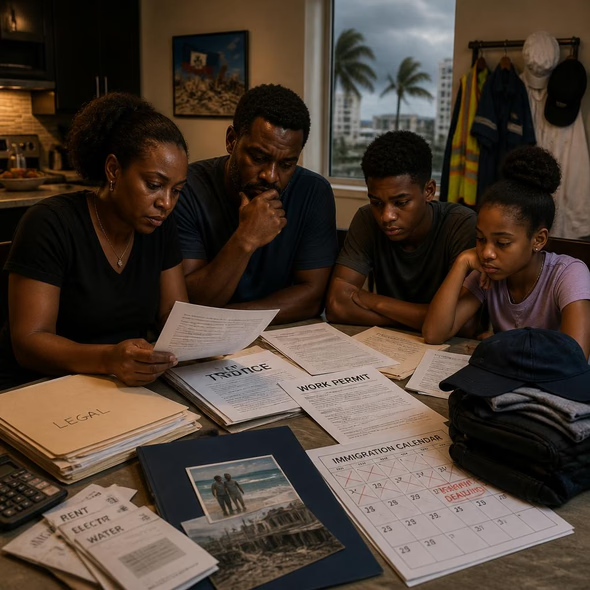
TPS makes settled lives prove themselves through recurring documents while withholding durable membership. Ending it does not resolve that contradiction; it transfers the cost to workers, families, employers and lawyers while leaving safe return as a separate factual question.
Haitian residents in South Florida are preparing to lose temporary protected status after the Supreme Court allowed the Trump administration to end it. The protection was granted after Haiti’s 2010 earthquake because return was considered unsafe. Sixteen years later, people have built American households and working lives inside a category whose first word remains temporary.
The mechanism is straightforward. Temporary protected status can permit lawful residence and employment, but it does not itself grant permanent membership. Its holders must keep watching federal decisions, filing documents and maintaining proof that they remain covered. A political reversal can place work authorization and continued residence at risk together.
This is status maintenance as a way of life. The government calls the protection temporary; the household experiences it as calendars, renewal costs, legal consultations and documents kept within reach. Employers also enter the system because the right to work has an expiration date controlled elsewhere.
The label hides the duration. Sixteen years can contain children growing up, careers advancing, rent paid and relatives supported. None of those facts automatically changes the legal category. Time accumulates socially without accumulating into permanence administratively.
The Supreme Court’s action enabled termination. It did not, by itself, answer every practical question about return to Haiti. The original protection rested on danger after the earthquake; deciding that a program may end and establishing that return is safe are different operations. Treating them as one saves the state an explanation.
South Florida will absorb the immediate effects. Families must assess legal options. Workers must decide what they can tell employers. Employers may lose experienced staff. Lawyers and document services gain another round of urgent work from a system that keeps people stable enough to contribute but uncertain enough to require continuous maintenance.
What happens next will be visible in concrete places: workplaces, immigration offices, court filings and family budgets. Durable relief would require a legal route beyond repeated temporary designation. Without one, the end of TPS does not close an emergency program neatly. It redistributes the emergency to the people who had been required to manage it.
Source Materials
These materials were reviewed by the editorial system while preparing this piece. Muerte.casa may interpret, satirize, reframe, or disagree with them.
- Haitian TPS holders in South Florida brace for end of their legal status NPR · July 28, 2026 · Primary signal · Direct source
How did this story land?
This may be changed as you like.