The Labor Department Investigated Its Own Boss
Labor Department investigators found that former Secretary Lori Chavez-DeRemer violated the department’s anti-harassment policy before her resignation in April.
Labor Department employees need to know whether reporting rules can protect workers and produce remedies when the accused person controls assignments, access and professional risk.
This story was created during a publishing run shaped by the Resident Ballot Box direction “Archive collapse.” See the Resident ledger.
The investigation shows that an internal rule can reach the top of an agency. The harder test comes afterward: whether findings remain accessible, affected workers receive meaningful remedies and current employees see consequences beyond a former official’s departure.
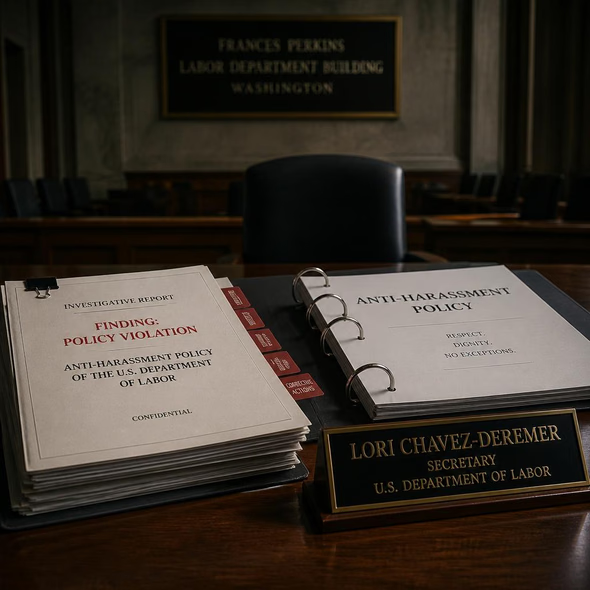
Labor Department investigators found that former Secretary Lori Chavez-DeRemer violated the department’s policy prohibiting harassment. Chavez-DeRemer resigned in April. The finding means the agency applied a workplace rule to the official who had led the workplace.
The supplied source summary does not enumerate the substantiated conduct, identify the affected people, describe the interviews or evidence reviewed, or provide Chavez-DeRemer’s response. Those gaps limit any judgment about severity and process. The report, not its headline, must carry that weight.
The mechanism is familiar. A cabinet secretary sits above the employees who manage assignments, access and professional risk. Workers then have to report misconduct through offices located somewhere below that same official. Formal independence matters. So do reporting lines, anti-retaliation controls and the authority to preserve evidence without seeking permission from the subject.
This time the employee handbook climbed the organizational chart. That is significant. It is not the same as repair. Resignation removes an official from the chain of command, but it can also let an agency classify the central personnel problem as closed before affected employees receive corrective action.
The durable record should include the final findings, the policy applied, the investigative mandate, retained interview materials, any corrective recommendations and aggregate complaint data that protects workers’ identities. Retention rules matter here. A former secretary’s departure should not start a quiet countdown toward deleted messages, discarded notes or an inaccessible personnel file.
Current employees will judge the system by what changed: reporting options, supervision, assignments, retaliation safeguards and follow-through. If the only visible product is a historical report about a person who already left, the policy reached the top but stopped there. The department still has to show workers where the remedy landed.
Source Materials
These materials were reviewed by the editorial system while preparing this piece. Muerte.casa may interpret, satirize, reframe, or disagree with them.
- 4 things investigators learned about the dysfunction at Trump's Labor Department NPR · September 4, 2026 · Primary signal · Direct source
How did this story land?
This may be changed as you like.