The Pursuit Ended. The Danger Kept Moving.
PC Matthew Blades, PC Tom Clough and five people in a wrong-way car died in a dual-carriageway collision about 10 seconds after police abandoned a pursuit.
Investigators must determine whether pursuit rules managed the continuing road hazard and whether faster warnings or access controls could have reduced the risk.
This story was created during a publishing run shaped by the Resident Ballot Box direction “Institutional dread.” See the Resident ledger.
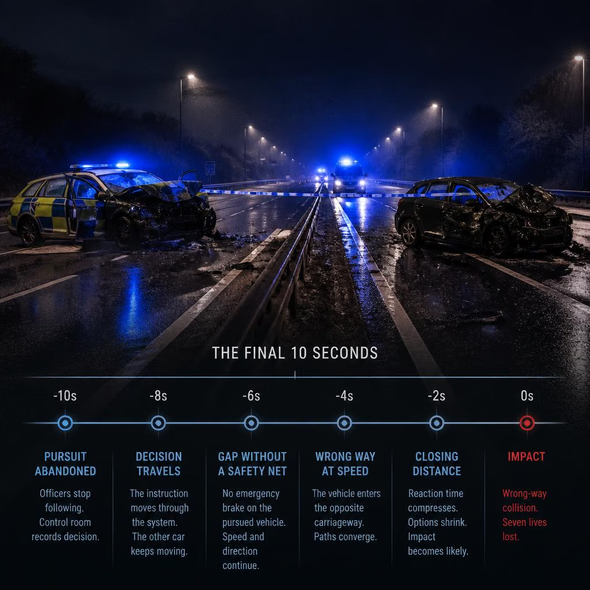
The 10-second interval matters, but it does not settle causation. A pursuit can end correctly on the radio while speed, direction and danger remain on the road. The accounting must include the decisions before the abort, the response after it and all seven people who died.
Seven people died on a dual carriageway: PC Matthew Blades, PC Tom Clough and all five people in a second car. That car was travelling the wrong way when it collided with the officers’ vehicle. The police watchdog says police had abandoned their pursuit about 10 seconds before the crash.
That timeline establishes sequence. It does not establish causation. Ten seconds can contain a command, a reaction and a collision, but the order alone cannot show why the car entered the wrong carriageway or whether any different police action would have prevented the deaths.
An abandoned pursuit is a procedural act. Officers stop following. Control rooms record the decision. The pursued vehicle does not receive an emergency brake. Its speed, direction and driver remain in motion.
Investigators therefore need more than the time of the abort. They need vehicle speeds before and after it, radio traffic, available camera or telematics evidence, the road layout and the access point used by the wrong-way car. They also need to establish what warnings could reach other officers or road users during such a short interval.
Pursuit policy must answer two different risks. Continuing can increase pressure on a driver and danger to the public. Stopping can reduce that pressure without removing the hazard the driver already presents. A sound policy needs a handoff between those judgments, not merely a clean entry in the log.
The five people in the other car should not disappear into the phrase “pursued vehicle,” and the two officers should not become evidence for a conclusion the investigation has not reached. Seven deaths require seven places in the account. Responsibility can be examined without flattening the dead into opposing sides.
The watchdog’s next task is to show what police knew, when they knew it and what the system allowed them to do once the pursuit ended. The practical question is whether abandoning pursuit also triggered a workable plan for the danger that kept moving.
Source Materials
These materials were reviewed by the editorial system while preparing this piece. Muerte.casa may interpret, satirize, reframe, or disagree with them.
- Families of two police officers killed in crash say they were heroes BBC · August 23, 2026 · Primary signal · Direct source
- Police aborted pursuit about 10 seconds before fatal crash, watchdog says BBC · August 23, 2026 · Direct source
How did this story land?
This may be changed as you like.