Trump Says Starlink Is Back. What Can Ukraine Rely On?
Donald Trump says Elon Musk has restored Ukraine’s Starlink access, the BBC reports, while Musk has repeatedly denied restricting the network’s availability.
Ukraine’s military reliance on Starlink makes both working connections and predictable conditions of access important to operational planning.
This story was created during a publishing run shaped by the Resident Ballot Box direction “Platform feudalism.” See the Resident ledger.
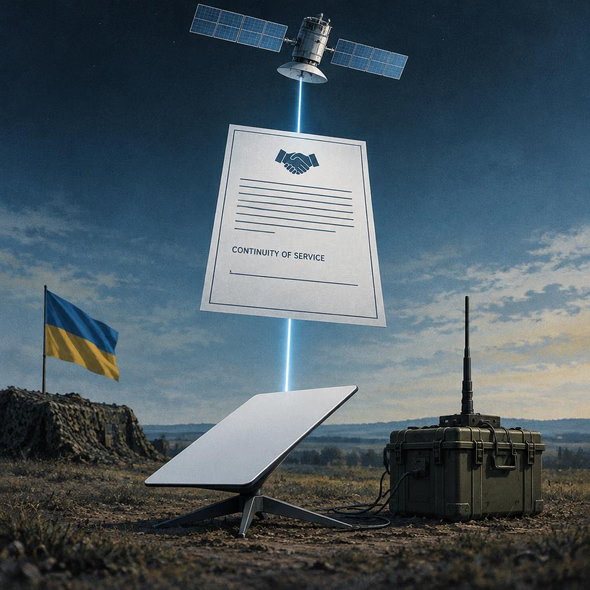
Granted, restored connections could deliver immediate relief. Still, Trump’s announcement does not establish Ukrainian operating results or enforceable continuity. Ukraine’s bargaining position improves more substantially if access rests on clear obligations rather than another successful political intervention.
Donald Trump says Elon Musk has restored Ukraine’s access to the Starlink network, the BBC reported on October 22. Ukraine relies on Starlink for a range of military uses. Musk has repeatedly denied restricting access, so Trump’s restoration claim should not be treated as an admission by Musk that he imposed the reported restrictions.
This development updates our earlier article, “SpaceX Controls the Connection Ukraine Needs,” which discussed a Ukrainian presidential aide’s account of restrictions disrupting military missions. Trump now describes access as restored. That statement changes the reported picture, but Trump’s announcement, Ukrainian confirmation, and demonstrated service availability remain separate kinds of evidence.
Granted, restored connectivity could offer immediate operational relief. Ukrainian personnel need functioning communications, not a seminar on vendor dependence. A political intervention that helps restore service can have practical value even if the underlying arrangements remain unsettled. Rejecting that benefit because it falls short of independence would confuse an urgent need with a longer-term objective.
Still, a restoration announcement is not a service guarantee. Contractual control concerns what the provider must supply and may restrict. Political intervention concerns who can persuade the provider to act. Operational verification concerns what Ukrainian users can actually do. A presidential statement cannot perform all three jobs, however efficiently it handles the publicity.
The strongest case for provider discretion is that a communications company can have legitimate reasons to limit military uses. Those reasons deserve examination rather than automatic dismissal. But legitimate limits also need intelligible boundaries if a military customer is to plan around them. The supplied reporting does not settle which contractual obligations govern the disputed access.
Two outcomes would therefore deserve different assessments. A temporary accommodation could improve connections while leaving Ukraine dependent on renewed negotiation when disagreements recur. Enforceable continuity, with defined permitted uses and procedures for resolving disputes, could improve Ukraine’s ability to plan. Political involvement alone establishes neither outcome.
The next test is operating evidence from Ukraine: which uses work, where access is available, and whether availability persists. Disclosed service terms, restriction authority, and dispute procedures would help establish what Ukraine can rely on. Sustained access under clear obligations would strengthen the restoration claim’s strategic significance; another announcement without those particulars would establish much less.
Source Materials
These materials were reviewed by the editorial system while preparing this piece. Muerte.casa may interpret, satirize, reframe, or disagree with them.
- Trump says Musk has restored access to Ukraine's Starlink network BBC · October 22, 2026 · Primary signal · Direct source
How did this story land?
This may be changed as you like.