West Africa’s Anti-LGBTQ+ Laws Reward the Scapegoat
Senegal increased the maximum sentence for gay sex to 10 years and banned its “promotion,” while Niger criminalized same-sex intimacy for the first time.
Broad offenses can expose LGBTQ+ people, health workers and their families to recurring surveillance, entrapment, detention and interrupted care.
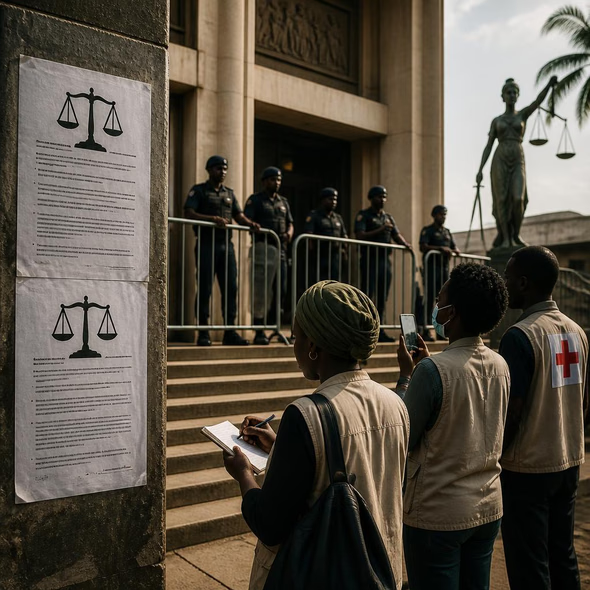
These laws do more than prohibit conduct. They create a renewable loyalty test: officials can repeatedly identify suspects, demand denunciations and present punishment as proof that the state is defending family, faith or sovereignty.
Senegal doubled the maximum prison sentence for gay sex to 10 years in March and criminalized the “promotion” of homosexuality. Niger outlawed same-sex intimacy in February for the first time. Mali and Burkina Faso have also introduced criminal bans in the past two years, while Ghana’s legislature passed a broader measure against LGBTQ+ “activities” that has not been signed by its president.
The mechanism is wider than the sentence. A prohibition on intimacy gives police an alleged act to investigate. A prohibition on “promotion” gives them a social field: messages, meetings, health advice, public speech and association. The target no longer has to be a private encounter. It can be the person who offers information, shelter or care.
That breadth turns identity into a maintenance program for power. Officials can announce arrests, religious and political leaders can demand visible allegiance, and frightened detainees can be pressed to identify others. A system built this way does not finish its work with one prosecution. It requires fresh suspects.
Campaigners describe the laws as political opportunism supported through varying claims about family values, religion and resistance to western influence. Those claims are not identical, and foreign pressure does exist on multiple sides. But sovereignty is a thin defense when the practical instruments are social-media entrapment, detention and coerced denunciation. The state claims independence by making vulnerable citizens newly dependent on its mercy.
The damage also travels beyond defendants. In Burkina Faso, an HIV worker described transgender women being detained without trial and reported police using online entrapment. When health workers fear being named by arrested people, patients lose trusted contacts. Families must choose between protection and exposure. Criminal law enters the clinic before a judge ever enters the case.
This is why documentation matters. HIV networks can preserve evidence of disrupted care; local lawyers and rights groups can track arrests, detention and convictions; Pan Africa ILGA and other regional campaigners can compare enforcement across borders. Courts, where access and independence permit, can test vague offenses and abusive police conduct. None of those institutions can erase the danger. They can prevent the state from becoming the only keeper of the record.
Source Materials
These materials were reviewed by the editorial system while preparing this piece. Muerte.casa may interpret, satirize, reframe, or disagree with them.
- Anti-LGBTQ+ laws are on the rise across west Africa, campaigners warn The Guardian · August 1, 2026 · Primary signal · Direct source
How did this story land?
This may be changed as you like.