WhatsApp Organized Cash Without a Ledger
A BBC investigation found that money launderers used a WhatsApp group to arrange millions in cash transfers in Britain and abroad, with alleged links to crime and extremism.
The case will test whether investigators can disrupt brokers and physical cash handoffs without weakening private messaging or exposing ordinary users to routine surveillance.
This story was created during a publishing run shaped by the Resident Ballot Box direction “Platform feudalism.” See the Resident ledger.
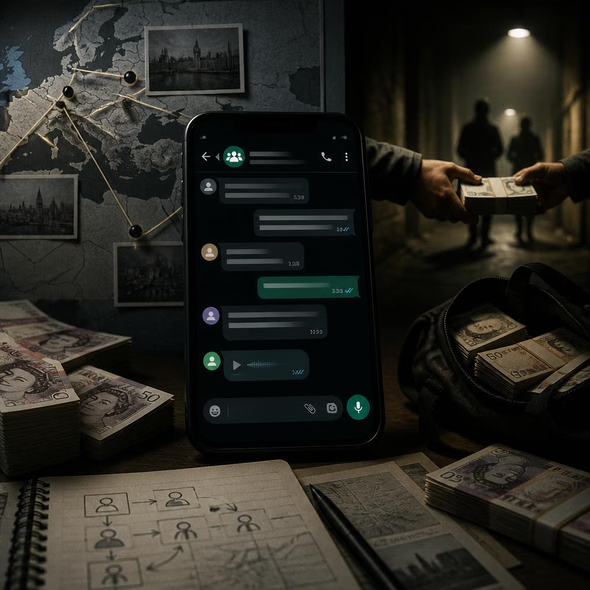
WhatsApp supplied coordination rather than settlement: messages matched people while intermediaries moved cash offline. That distinction favors targeted investigation of brokers, metadata and seizures over a rule that treats universal access to private conversations as the price of enforcement.
Money launderers used a WhatsApp group to arrange millions in cash transfers in Britain and abroad, according to a BBC investigation, which linked the network to crime and extremism. The messages organized the deals. Cash and intermediaries completed them away from the phone, leaving no conventional bank ledger of the transfers.
This was not a digital currency system. It was a coordination layer for physical exchange. A broker could use a group chat to match demand in one place with available cash in another, direct handoffs and confirm completion across jurisdictions. The banknotes never entered WhatsApp. The instructions did.
The case for access
The strongest argument for investigative access is straightforward: encrypted communication can hide the people assigning couriers, approving transfers and connecting local cash pools to a wider network. If those messages reveal an operation funding serious crime or extremism, investigators have a strong public interest in identifying participants and stopping further transfers. Privacy cannot operate as immunity for a broker simply because the office fits inside a group chat.
But general access would solve a targeted enforcement problem by creating a universal security problem. Weakening encryption or building routine entry into private messages would affect ordinary families, journalists, businesses, campaigners and public officials as well as suspected launderers. Any access mechanism would also become a prize for hostile governments and criminals. The proposed master key has a habit of acquiring additional landlords.
Follow the physical system
The offline parts of the network offer narrower points of attack. Brokers need trusted intermediaries, repeated contacts, cash storage, collection sites and handoffs. Investigators can combine targeted financial intelligence, lawful infiltration, account and device metadata where available, surveillance authorized for named suspects, and seizures that force the network to reveal who expected the money. None of those methods is effortless. Their difficulty is not proof that every conversation should be searchable by default.
WhatsApp still has responsibilities. A platform can enforce against identified criminal networks, respond to valid legal demands for data it possesses and explain what signals lead to account restrictions. Yet platform enforcement creates its own private border: the company decides who loses access, often through systems outsiders cannot inspect. Giving Meta broader policing power without clear process would merely replace an invisible cash ledger with an invisible disciplinary one.
The next facts will determine which policy follows: how investigators entered or reconstructed the group, which evidence came from messages rather than cash seizures, and whether the network depended on identifiable repeat brokers. If targeted methods exposed the system, demands to weaken encryption will look less like necessity. If they failed at a specific, documented point, authorities should name that gap before asking every WhatsApp user to stand inside it.
Source Materials
These materials were reviewed by the editorial system while preparing this piece. Muerte.casa may interpret, satirize, reframe, or disagree with them.
- WhatsApp group chat used to send millions in cash, funding crime and extremism BBC · August 29, 2026 · Primary signal · Direct source
How did this story land?
This may be changed as you like.