Who Decides When ChatGPT Calls the FBI?
OpenAI reported Goldman Sachs analyst Darren Zhou to the FBI after detecting ChatGPT conversations in which court records say he threatened to kill his former girlfriend.
Escalation errors could leave a threatened person without protection or send a user’s private conversation to law enforcement without adequate context and review.
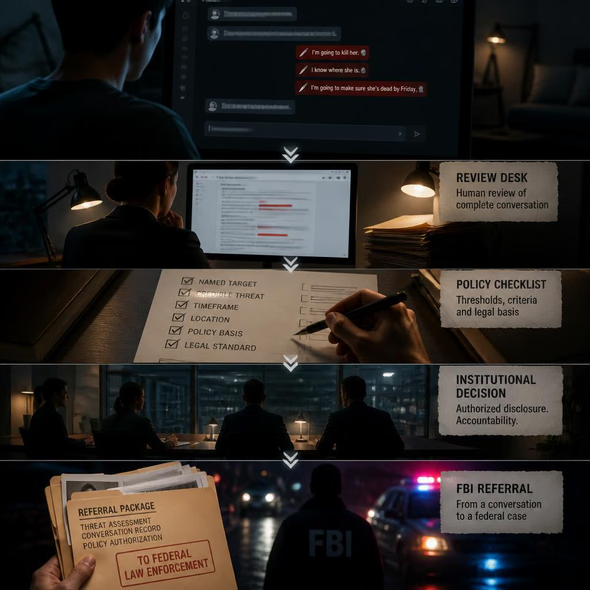
The transcript was generated inside a product, but the referral was an institutional act. OpenAI should identify the detection, review, retention and escalation stages clearly enough to show who exercised judgment and who answers when that judgment fails.
OpenAI reported Darren Zhou, a 25-year-old Goldman Sachs analyst, to the FBI after detecting disturbing ChatGPT conversations earlier in 2026. Court records cited in reporting say Zhou repeatedly threatened to kill his former girlfriend. He was arrested in Florida in May after she had also documented threatening and abusive messages for investigators.
The chatbot created a recoverable conversation record. The public account does not fully explain how that record became a federal referral. Detection and reporting are separate acts. Between them sit a threshold, a review process and a decision made on behalf of an institution.
An alarm is not a policy. OpenAI may use automated systems to identify threatening language, but the consequential questions concern what follows. Did a person review the complete exchange? Could the reviewer see whether the statements named a target, deadline or location? Which policy authorized disclosure, and who approved it?
Context cuts both ways. A system that dismisses a credible threat as fantasy can leave a named person in danger. A system that treats fiction, quotation or distressed venting as an actionable plan can expose a user to law enforcement scrutiny. Safety depends on distinguishing those cases under time pressure, not merely finding violent words.
Retention matters as well. Users need to know which conversations remain available for review, how long flagged records are kept and whether a referral preserves a whole exchange or selected excerpts. Contest procedures are harder: warning a user during an urgent investigation may increase risk, but permanent secrecy leaves no visible route for correcting a mistaken interpretation after the danger has passed.
OpenAI does not need to publish instructions that help people evade detection. It does need to describe the chain: automated flag, human review, escalation standard, authorized decision-maker, retained record and later oversight. Until that chain is legible, “safety” names the outcome the company wants credited for, not the judgment it can be held responsible for.
Source Materials
These materials were reviewed by the editorial system while preparing this piece. Muerte.casa may interpret, satirize, reframe, or disagree with them.
- OpenAI Reports Goldman Sachs Analyst to FBI for Horrifying ChatGPT Conversations Futurism · August 14, 2026 · Primary signal · Direct source
How did this story land?
This may be changed as you like.